nnn
nnn
The Architecture of Sisterhood: My Conversation with Dr. Johnnetta B. Cole
The Architecture of Sisterhood: My Conversation with Dr. Johnnetta B. Cole
When you first arrive on campus, surrounded by hundreds of brilliant, ambitious Black women, the expectation of immediate, unbroken bonds can be overwhelming. As incoming Spelmanites, we are taught endlessly about sisterhood as a founding ideal of Spelman College, woven into the very fabric of our institutional tradition. Yet, we are rarely taught how to actually construct it, how to repair it when it inevitably fractures or ultimately, how to discern who is truly meant to be a sister.
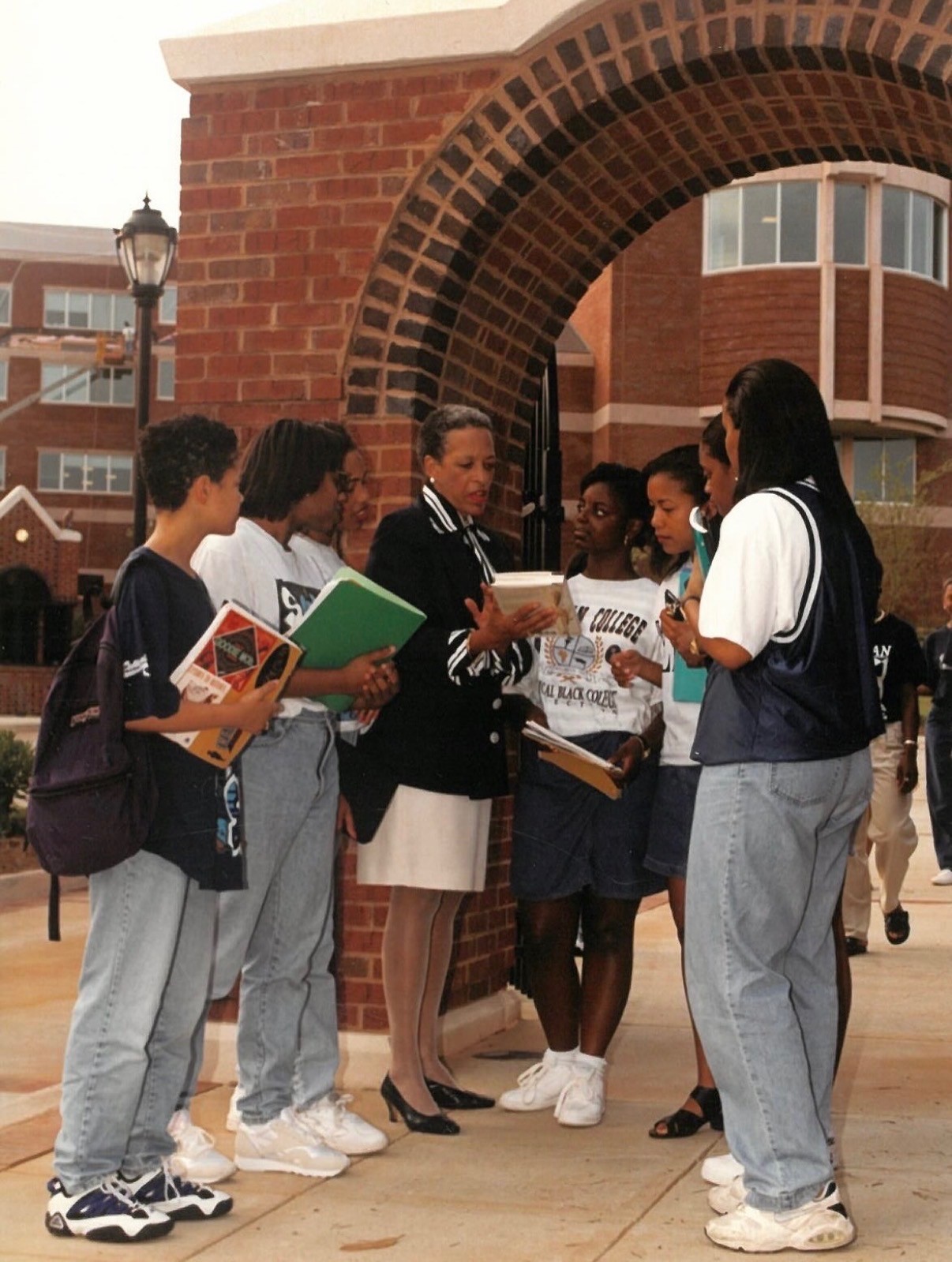
To navigate these growing pains and unpack what it truly takes to sustain relationships across time and difference, the person I called on was Dr. Johnnetta B. Cole. Known affectionately to generations of Spelmanites as our “Sister President,” she rings in from her home in Washington, D.C., offering a masterclass on community and the lifelong, deliberate work of holding space for one another.
Before she ever stepped into educational leadership or shaped the minds of thousands of scholars, Dr. Cole’s understanding of sisterhood was forged within the walls of her childhood home alongside her elder sister, MaVynee Betsch — famously known later in life as the legendary environmentalist “Beach Lady.”
Raised in Jacksonville, Florida, during the era of Jim Crow, by a father who was an insurance executive and a mother who started out as an educator at Edward Waters College, the ‘two Betsch girls’, as Dr. Cole affectionately describes the pair, who grew up in a household rich in African-American heritage and intellectual rigor. Just 13 months apart in age, their early childhood was largely a world built around the two of them.
“I had such admiration for my sister,” Dr. Cole said with deep fondness.
Her sister MaVynee was an extraordinarily gifted musician who double-majored at the prestigious Oberlin Conservatory of Music and went on to sing lead roles across European opera houses in iconic productions like Madama Butterfly and Aida. Later in life, MaVynee would channel that same grand passion into becoming the major force behind preserving American Beach, the historic Black resort town on Amelia Island founded in part by their great-grandfather, Abraham Lincoln Lewis.
Dr. Cole laughs, remembering the theatrical dynamic of their youth.
“It was not unusual for my sister to say, ‘Oh, I just feel so called to go to the piano right now, but not to worry, Bougie [Dr. Cole’s childhood nickname] will do the dishes,” she said.
Yet beneath the sibling banter lay an unshakable foundation of love and mutual respect.
“And even though she was ‘the diva,’ I know she adored me,” Dr. Cole said, adding that this dynamic set the tone for her relationship with her brother, born nine years after the two. “My first experience with a ‘blood sister’ was wonderful.”
Leaving home brought a completely new cultural landscape. Dr. Cole attended Oberlin College, historically recognized as the first coeducational and interracial college in the United States. Transitioning into an environment where Black students were a small minority posed its own set of challenges, but it also expanded her horizon on where and how authentic sisterhood can be cultivated.
“I did find sisterhood at Oberlin, even though it was not full of folks who look like you and me. But we were there,” she said.
It was during and immediately after her time at Oberlin that she forged deep, lifelong ties with her “sister-friends” — women like the late renowned anthropologist Dr. Niara Sudarkasa. Her relationship with Sudarkasa, in particular, became a cornerstone of her life as their professional and personal trajectories mirrored each other in a plethora of ways: both born in Florida to Black families, both entering Fisk University as young scholars, both becoming pioneering cultural anthropologists and both eventually rising to lead historic HBCUs. Sudarkasa served as president of Lincoln University, while Cole was Spelman’s.
Through every stage of her career her definition of genuine connection remained steadfastly grounded in reciprocity.
“[We] have both continued to learn from each other. If I am asked to list the attributes of a sisterly relationship, those two must continue to learn from and teach one another,” Dr. Cole said, invoking the enduring proverb: “She who learns must teach, and she who teaches must learn.”
When Dr. Cole assumed the presidency in 1987, she brought a vision of sisterhood that refused to remain exclusive — even when that vision challenged deeply entrenched traditions. Shortly after her appointment, during a public question-and-answer session held in Sisters Chapel, an eager student leader stood up and raised a bold, defining question that would push boundaries.
“Dr. Cole, I am a part of the LGBT community here, but no matter what we do, the college will not formally recognize us as an organization,” Dr. Cole said.
Dr. Cole’s response marked a historic turning point for the campus.
“You would've thought I tried to tear down the college brick by brick,” Dr. Cole said. “The response I got from countless alumni was, ‘How dare you? We don't need that there.’ But that was the beginning of Afrekete [Spelman's first recognized LGBTQ+ student organization].”
For Dr. Cole, recognition is a fundamental imperative tied to the true definition of community.
“Because how dare we, or I, claim sisterhood, but it only belongs to some of us?,” she said.
During her presidency, she brought this same philosophy to the classroom.
“In [my] courses, I was able to interrogate just what you're doing now. What is sisterhood? Because I was teaching in those areas of my own specialization — anthropology, women’s studies, and afro-american studies,” she said.
So what, truly, is a sister? Quoting Zora Neale Hurston, Dr. Cole echoes a sobering truth about community: “All my skinfolk ain’t my kinfolk.” Throughout our matriculation, we often come to realize that not all relationships are built to last, nor are all friends guaranteed to be true. In these short four years and beyond, we should expect others to change, and acknowledge transformation in ourselves as well.
“I’m not standing on some mountain of goodness looking down preaching. I’m sure I could do better at it. Is there somebody I say is a close sister-friend of mine who I haven’t called recently to check on? In this wretchedly difficult period that we’re living in? Do I always turn off the gossip about some sister?,” she said. “We have more work to do. I’m not at Spelman, but one thing I really try to do as a former President is not to meddle. I had my time. But I do have to ask, is there enough attention to what you, my Spelman sister, have stepped out to give attention to? And it’s called: the sisterhood.”
When you first arrive on campus, surrounded by hundreds of brilliant, ambitious Black women, the expectation of immediate, unbroken bonds can be overwhelming. As incoming Spelmanites, we are taught endlessly about sisterhood as a founding ideal of Spelman College, woven into the very fabric of our institutional tradition. Yet, we are rarely taught how to actually construct it, how to repair it when it inevitably fractures or ultimately, how to discern who is truly meant to be a sister.
To navigate these growing pains and unpack what it truly takes to sustain relationships across time and difference, the person I called on was Dr. Johnnetta B. Cole. Known affectionately to generations of Spelmanites as our “Sister President,” she rings in from her home in Washington, D.C., offering a masterclass on community and the lifelong, deliberate work of holding space for one another.
Before she ever stepped into educational leadership or shaped the minds of thousands of scholars, Dr. Cole’s understanding of sisterhood was forged within the walls of her childhood home alongside her elder sister, MaVynee Betsch — famously known later in life as the legendary environmentalist “Beach Lady.”
Raised in Jacksonville, Florida, during the era of Jim Crow, by a father who was an insurance executive and a mother who started out as an educator at Edward Waters College, the ‘two Betsch girls’, as Dr. Cole affectionately describes the pair, who grew up in a household rich in African-American heritage and intellectual rigor. Just 13 months apart in age, their early childhood was largely a world built around the two of them.
“I had such admiration for my sister,” Dr. Cole said with deep fondness.
Her sister MaVynee was an extraordinarily gifted musician who double-majored at the prestigious Oberlin Conservatory of Music and went on to sing lead roles across European opera houses in iconic productions like Madama Butterfly and Aida. Later in life, MaVynee would channel that same grand passion into becoming the major force behind preserving American Beach, the historic Black resort town on Amelia Island founded in part by their great-grandfather, Abraham Lincoln Lewis.
Dr. Cole laughs, remembering the theatrical dynamic of their youth.
“It was not unusual for my sister to say, ‘Oh, I just feel so called to go to the piano right now, but not to worry, Bougie [Dr. Cole’s childhood nickname] will do the dishes,” she said.
Yet beneath the sibling banter lay an unshakable foundation of love and mutual respect.
“And even though she was ‘the diva,’ I know she adored me,” Dr. Cole said, adding that this dynamic set the tone for her relationship with her brother, born nine years after the two. “My first experience with a ‘blood sister’ was wonderful.”
Leaving home brought a completely new cultural landscape. Dr. Cole attended Oberlin College, historically recognized as the first coeducational and interracial college in the United States. Transitioning into an environment where Black students were a small minority posed its own set of challenges, but it also expanded her horizon on where and how authentic sisterhood can be cultivated.
“I did find sisterhood at Oberlin, even though it was not full of folks who look like you and me. But we were there,” she said.
It was during and immediately after her time at Oberlin that she forged deep, lifelong ties with her “sister-friends” — women like the late renowned anthropologist Dr. Niara Sudarkasa. Her relationship with Sudarkasa, in particular, became a cornerstone of her life as their professional and personal trajectories mirrored each other in a plethora of ways: both born in Florida to Black families, both entering Fisk University as young scholars, both becoming pioneering cultural anthropologists and both eventually rising to lead historic HBCUs. Sudarkasa served as president of Lincoln University, while Cole was Spelman’s.
Through every stage of her career her definition of genuine connection remained steadfastly grounded in reciprocity.
“[We] have both continued to learn from each other. If I am asked to list the attributes of a sisterly relationship, those two must continue to learn from and teach one another,” Dr. Cole said, invoking the enduring proverb: “She who learns must teach, and she who teaches must learn.”
When Dr. Cole assumed the presidency in 1987, she brought a vision of sisterhood that refused to remain exclusive — even when that vision challenged deeply entrenched traditions. Shortly after her appointment, during a public question-and-answer session held in Sisters Chapel, an eager student leader stood up and raised a bold, defining question that would push boundaries.
“Dr. Cole, I am a part of the LGBT community here, but no matter what we do, the college will not formally recognize us as an organization,” Dr. Cole said.
Dr. Cole’s response marked a historic turning point for the campus.
“You would've thought I tried to tear down the college brick by brick,” Dr. Cole said. “The response I got from countless alumni was, ‘How dare you? We don't need that there.’ But that was the beginning of Afrekete [Spelman's first recognized LGBTQ+ student organization].”
For Dr. Cole, recognition is a fundamental imperative tied to the true definition of community.
“Because how dare we, or I, claim sisterhood, but it only belongs to some of us?,” she said.
During her presidency, she brought this same philosophy to the classroom.
“In [my] courses, I was able to interrogate just what you're doing now. What is sisterhood? Because I was teaching in those areas of my own specialization — anthropology, women’s studies, and afro-american studies,” she said.
So what, truly, is a sister? Quoting Zora Neale Hurston, Dr. Cole echoes a sobering truth about community: “All my skinfolk ain’t my kinfolk.” Throughout our matriculation, we often come to realize that not all relationships are built to last, nor are all friends guaranteed to be true. In these short four years and beyond, we should expect others to change, and acknowledge transformation in ourselves as well.
“I’m not standing on some mountain of goodness looking down preaching. I’m sure I could do better at it. Is there somebody I say is a close sister-friend of mine who I haven’t called recently to check on? In this wretchedly difficult period that we’re living in? Do I always turn off the gossip about some sister?,” she said. “We have more work to do. I’m not at Spelman, but one thing I really try to do as a former President is not to meddle. I had my time. But I do have to ask, is there enough attention to what you, my Spelman sister, have stepped out to give attention to? And it’s called: the sisterhood.”