Riley, Kathryn. 8 Feb. 2026. Getty Images
Riley, Kathryn. 8 Feb. 2026. Getty Images
Rooted In Culture: A Recap Of Bad Bunny’s Super Bowl Halftime Show
Rooted In Culture: A Recap Of Bad Bunny’s Super Bowl Halftime Show
On Sunday, Feb. 8, Bad Bunny delivered a halftime show rooted in culture and identity. Performed entirely in Spanish, it was a brilliant tribute to Latino culture and the Latin American diaspora. This cultural statement sparked a conversation about the trials and tribulations faced by Latinos, particularly Puerto Ricans from Bad Bunny’s home island.
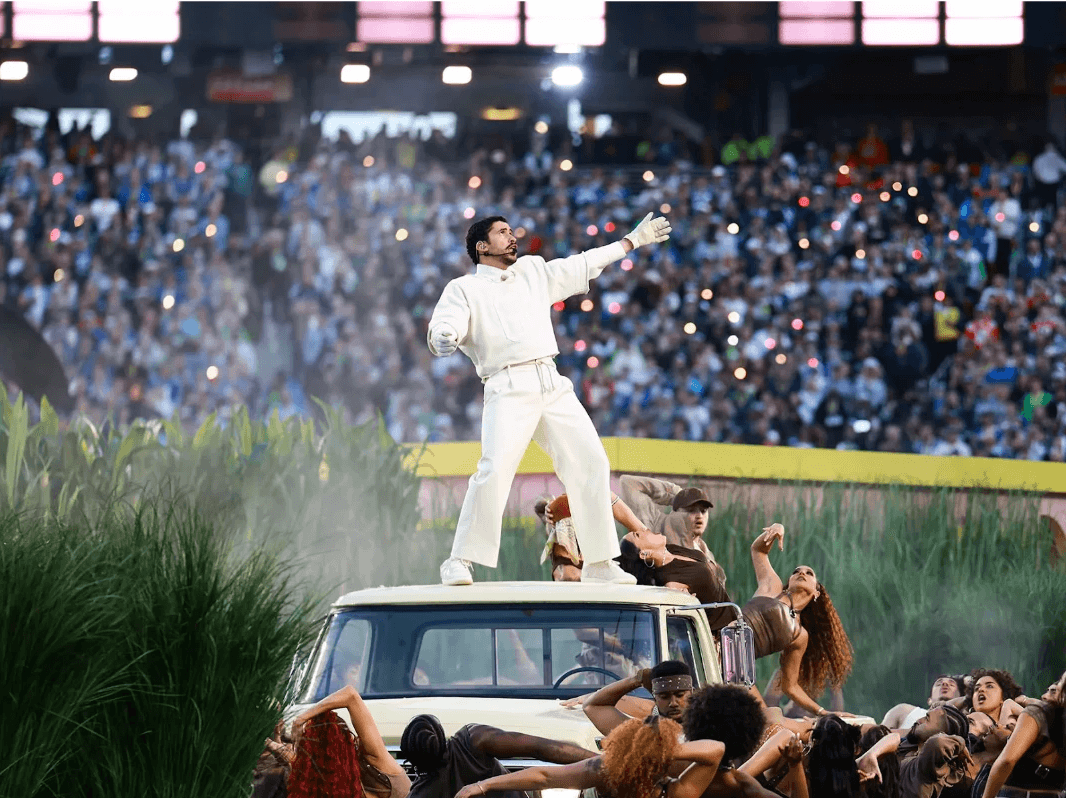
The performance opens in a sugarcane field, a powerful nod to Puerto Rico’s historic sugar plantations and the labor of agricultural workers who sustained the island’s economy. He also paid tribute to Latino culture, emphasizing shared experiences, such as a young boy sleeping across two chairs in the middle of a wedding party and the iconic pink “La Casita.”
“Watching the halftime performance was powerful and very emotional for me. As someone who is multiethnic, with Latin, Caribbean and African roots, I saw pieces of my own history on stage and the resilience of my communities that have been oppressed and misunderstood,” transfer student Aliciana Harvey-Lopez said.
Bad Bunny’s performance could not be mentioned without acknowledging his choreographer, Charm La’Donna. Having also choreographed Super Bowl Halftime shows headlined by Kendrick Lamar, The Weeknd and Beyoncé, she is the architect behind some of the world’s influential cultural movements.
“I truly enjoyed Bad Bunny’s Super Bowl performance, it was creative, meaningful and full of symbolism,” freshman Terianna Telford said. “What disappointed me was the backlash, especially from younger audiences, because the issue isn’t a lack of understanding, but a choice not to try and understand it. That refusal is the issue.
Negative reactions to the fully Spanish performance were largely fueled by conservatives, who prompted their own alternative show titled “The All-American Halftime Show,” headlined by Kid Rock and organized by Turning Point USA. But this backlash raises a larger question: What does it truly mean to be “All-American”?
At the end of the show, Bad Bunny delivered a bone-chilling statement, listing every Spanish-speaking country and island, their flags lifted behind him. He held up a football that read, “Together We Are America,” reinforcing the message that the American identity is not monolithic.
“Seeing our cultures and hearing Spanish on national television as something honored and embraced felt affirming. It reminded me, and so many others, that our identities are not something to hide. They are something to carry with pride,” Harvey-Lopez said.
On Sunday, Feb. 8, Bad Bunny delivered a halftime show rooted in culture and identity. Performed entirely in Spanish, it was a brilliant tribute to Latino culture and the Latin American diaspora. This cultural statement sparked a conversation about the trials and tribulations faced by Latinos, particularly Puerto Ricans from Bad Bunny’s home island.
The performance opens in a sugarcane field, a powerful nod to Puerto Rico’s historic sugar plantations and the labor of agricultural workers who sustained the island’s economy. He also paid tribute to Latino culture, emphasizing shared experiences, such as a young boy sleeping across two chairs in the middle of a wedding party and the iconic pink “La Casita.”
“Watching the halftime performance was powerful and very emotional for me. As someone who is multiethnic, with Latin, Caribbean and African roots, I saw pieces of my own history on stage and the resilience of my communities that have been oppressed and misunderstood,” transfer student Aliciana Harvey-Lopez said.
Bad Bunny’s performance could not be mentioned without acknowledging his choreographer, Charm La’Donna. Having also choreographed Super Bowl Halftime shows headlined by Kendrick Lamar, The Weeknd and Beyoncé, she is the architect behind some of the world’s influential cultural movements.
“I truly enjoyed Bad Bunny’s Super Bowl performance, it was creative, meaningful and full of symbolism,” freshman Terianna Telford said. “What disappointed me was the backlash, especially from younger audiences, because the issue isn’t a lack of understanding, but a choice not to try and understand it. That refusal is the issue.
Negative reactions to the fully Spanish performance were largely fueled by conservatives, who prompted their own alternative show titled “The All-American Halftime Show,” headlined by Kid Rock and organized by Turning Point USA. But this backlash raises a larger question: What does it truly mean to be “All-American”?
At the end of the show, Bad Bunny delivered a bone-chilling statement, listing every Spanish-speaking country and island, their flags lifted behind him. He held up a football that read, “Together We Are America,” reinforcing the message that the American identity is not monolithic.
“Seeing our cultures and hearing Spanish on national television as something honored and embraced felt affirming. It reminded me, and so many others, that our identities are not something to hide. They are something to carry with pride,” Harvey-Lopez said.