Spelman College Archives
Spelman College Archives
Keys to the Kingdom: Unlocking Spelman Admissions
Keys to the Kingdom: Unlocking Spelman Admissions
Each holiday season, thousands of young women around the world wait patiently—if somewhat anxiously—for their newest prized possession: a Columbia blue envelope. Today, these packages often arrive first as emails, bursting with animated confetti and balloons. They represent a fresh start, a promise of possibility, and a place where many young Black women believe their aspirations can finally take shape, carrying them closer to the lives they have long imagined. More than 58,990 young women around the globe have set their sights upon 350 Spelman Lane and the rich college experience that it promises, since 2020. An experience riddled with tradition and transformation, where many students find their bridesmaids, their intellectual passions and more realized versions of themselves. Within four short years, one encounters moments where one’s experience takes on a mystic quality that straddles the line between fantasy and reality.
As interest in Spelman College grows and the legacy of the institution becomes increasingly allegorical with each passing generation, its gates have become increasingly more difficult for young women to scale.
“It’s harder to get into Spelman College now than ever before,” Chelsea Holley, director of admissions, said. “With a 23% acceptance rate, there are a lot of girls who do almost everything right and are not getting in, which is challenging, but we're humans trying to make the best judgment we can under constraints that we don't have much control over, including incessantly growing application interest.”
Throughout Spelman’s almost 145-year history, young women’s interest and access to the institution has waxed and waned, and the contour of this interest weaves a narrative about what it has meant, throughout time, for Black women to move through the world as degree-seeking individuals.
During its early days, the majority of Spelman’s students were young women from the Atlanta area, along with Florida and South Carolina, who sought out the campus as a local and reputable institution. The 1894 issue of the Spelman Seminary Catalog cited that requirements of admission were “expected to bring testimonials of good moral character, and recommendations or certificates from the teacher of the school last attended.”
As the institution continued to grow in size and stature, Spelman’s developing pedigree began to attract an increasingly diverse student body that approached the institution in search of solace. Reflecting on the freshmen of the 1942-43 school year, the Spelman Mirror staff wrote, “As usual the doors of Spelman College were flung wide to admit students from all over the United States. These gay, noisy freshmen’s minds were turned immediately toward greater determination and sacredness. Because of the worldwide crisis, the human conflicts, and the struggle for existence, many useful and spiritual comments were made.”
The increasingly expansive impact of the college’s alumnae community also began to resonate with prospective students. Florence Read’s The History of Spelman College notes that when one young woman was asked, “Why do you wish to attend Spelman College,” she stated that her “interest in [the] school was first aroused when [she], as a little girl, noticed the change that came over [her] sister while she was a student there. She assumed a quiet dignity along with a rugged determination. Ever since that time, having come in contact with other alumni of your college, I have sensed that there was some inner quality that characterized them and set them apart from others.”
Sentiments such as this demonstrate that, over time, Spelman has increasingly become a place where one can not only gain access to personal development but, perhaps even more desirably, step into familial legacies and purpose.
A Study of Cooperation in the Atlanta University Center was conducted in 1950 after being commissioned by the General Education Board and argued, after reviewing facets of Spelman’s cultural, financial and economic growth, that the college should “limit its enrollment to 500 students in order to provide adequate resources in buildings, equipment and staff.”
Over the next 60 years, the institution’s admissions office was able to adhere to that recommendation until the 2010s. Even though interest in Historically Black Colleges and Universities (HBCU) grew by 26% from the late 1970s to the early 1990s, largely due to the cultural resonance of TV programs like “A Different World” and increased alumnae engagement, Spelman was still able to maintain the intimate student body size for which the college was originally designed, thanks to steady application, yield and acceptance rates.
During the past five years, however, Spelman’s incoming freshman classes have expanded significantly. This trend has created overcrowding on campus that many current students experience today, citing its impact on housing and on-campus dynamics and how it has shifted the overall culture of the institution.
“So many of us are not having the Spelman experience that was advertised to us and that so many alumnae so prayerfully want us to have, and I believe a huge part of that difference has to do with our class sizes and housing availability,” Gabrielle Adams, Class of 2027 and SGA secretary of institutional research, planning and effectiveness, said. “One of the biggest goals that I have for the remainder of my time as a member of the Student Government Association is to use the resources and access that I have to bridge that gap.”
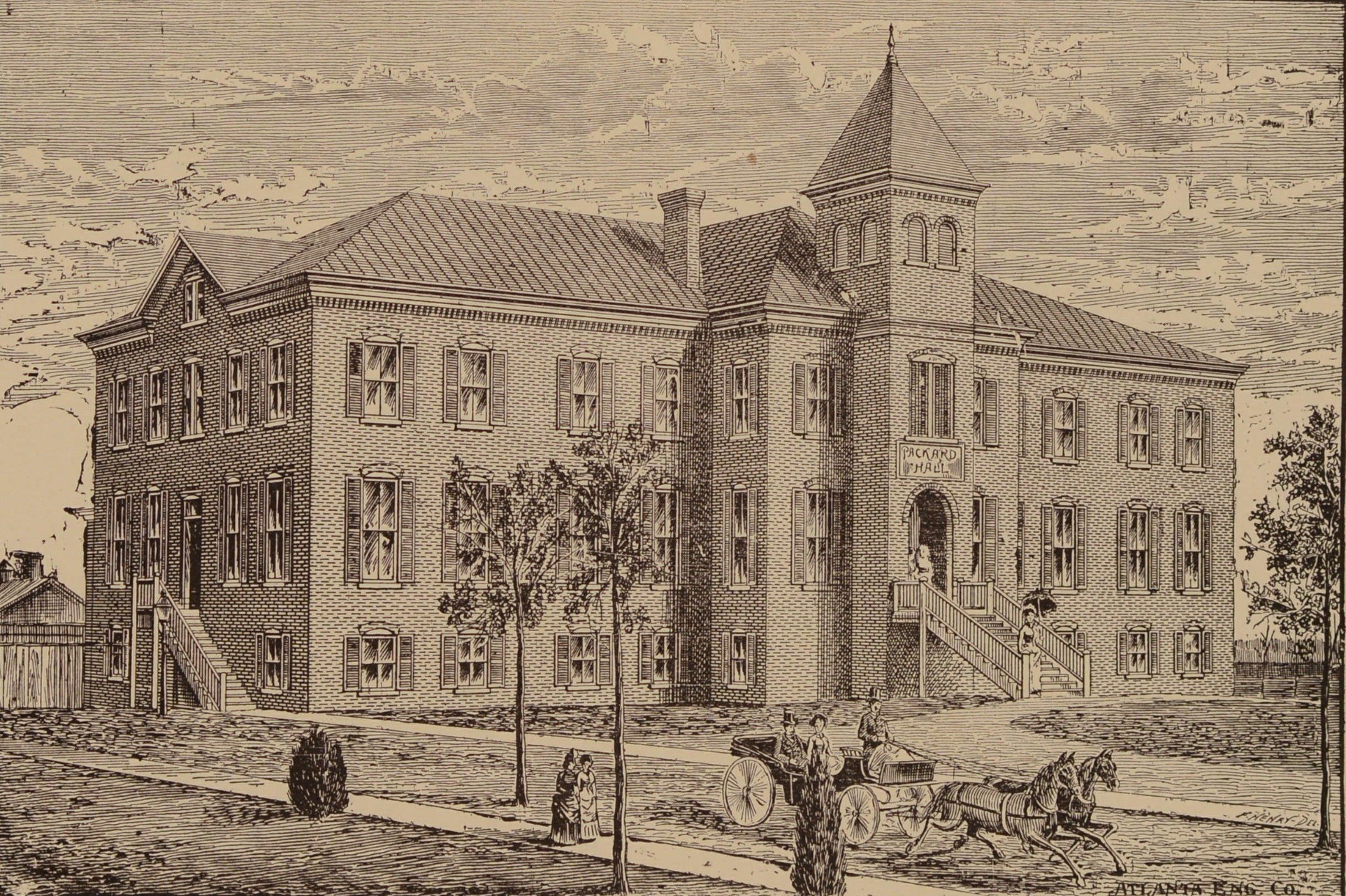
This population increase is one of the more common points of contention on campus. With many students only living on campus during their freshman year, required classes filling up within seconds and many Spelmanites struggling to find community within competitive registered student organizations. It is easy to point fingers at Packard and place blame on the Office of Admissions by accusing it of overadmitting, however, the truth is far more nuanced.
“All colleges and universities are admitting far more people than those who actually commit,” Holley said. “At Spelman we admit thousands of students in order to make our class. In the past five years, however, our acceptance rate has dropped by 29%t because of increased application numbers and increased yield. It is a completely different landscape, and we’re constantly trying to adjust our strategies.”
Yield is defined in the admissions space as the percentage of accepted applicants who formally commit to the college or university. While the power of Spelman’s admissions process may seemingly lie within wooded conference rooms in Packard Hall, this key facet of the admissions process is ultimately the deciding factor in the size of an incoming freshman class, and it is constantly in flux. In 2020, 11% of accepted students committed to the college. By 2025, that percentage rose to 25%.
“More and more young women are falling in love with Spelman harder than ever before, which is a beautiful thing,” Holley said. “Part of that beauty, however, is acknowledging that increased interest is inherently paired with a more competitive landscape.”
Reflecting on her own admissions journey, Naomi Battle, Class of 2029, remembers the feelings of uncertainty she grappled with.
“I remember seeing the falling acceptance rate and feeling so much doubt around whether I was even worthy of attending such an institution,” Battle said. “My greatest inspiration for attending Spelman College was the freedom I felt whenever I saw pictures and videos of the school culture.”
Much of the content and narrative surrounding Spelman is still woven by its official channels, like its Instagram page and TikTok. However, an equally influential segment of the school’s brand identity is shaped by its students themselves. Over the past five years, student content creation has reached a new level of vigor, with creators such as Madi Harris (@luv4madiii), Ariel Neal (@arielineal), and Trinity Aniyah (@trinityaniyahh), whose thousands of followers give them the power to provide new generations of Spelmanites with warm and welcoming first impressions.
Just as the college commits to pouring into the whole individual, these reflections of love and liberation point to the campus’s ability to equip its students with something that extends beyond an applicant’s social life. They gesture toward a promise to tap into and serve students’ full being as young Black femmes.
"There are applicants who may have initially been considering a Predominantly White Institution (PWI), only to realize it may no longer have a Black Student Union, or to see a video of one of its Palestinian students being arrested outside her residence hall," Holley said. "I truly believe that content like this raises a lot of questions among applicants about what kind of space they want to subject themselves to during such formative years."
These forces have coalesced and rendered Spelman as more than a safe haven. It has transformed into a place of refuge, a space where, for four years, Black femmes can remove themselves from a volatile political landscape and relish a singular environment. Granted, the space will still contain levels of stress, competition and social pressure, but these trademark issues are removed from race, allowing them to manifest in ways that provide students access to new reservoirs of emotion and personal evolution.
“Spelman felt freeing, like a new beginning,” Battle said. “I was willing to work however hard I needed to in order to achieve that new beginning.”
The Spelman Ambassador Program is the first formal point of access applicants have to the college. Through events like Junior Preview Day, Day in the Life and on-campus tours, the 13-person team curates experiences designed to leave lasting, positive impressions.
Kendall Cade, Class of 2027, leads the events and logistics committee, which is responsible for designing experiences and ensuring their efficiency.
“As a program, we try to ensure that ambassadors are trained to tell their Spelman stories about the different experiences they've had in different aspects of Spelman culture, so applicants can really see themselves here and develop that interest.”
Morgan Chambers, Class of 2026 and a veteran Spelman Ambassador, has noted the evolution of that interest during her weekly tours.
“It’s gone through a complete 180,” Chambers said.
She mentioned that the transition is also evident in how prospective students engage during tours.
“I always ask the girls at the beginning of my tours where they rank Spelman on their list of colleges. In the past, the school would usually be around five or six. Now it's at number one for almost every girl I speak to,” Chambers said. “Another large shift I've noticed is that the girls themselves are asking more of the questions. When I toured with my parents, I remember my mom and other people's moms asking the majority of the questions on the tour. Now these girls are taking their admissions experience into their own hands.”
This visceral shift extends far beyond the tour path and traces up to the second floor of Rockefeller, where Holley and her staff of 13 work to better understand these trends from a perspective that weaves together the analytical and emotional in a holistic way.
“As people who work in admissions, we do so much translating of what we're doing behind the scenes to other people, and if you listen hard enough to what we say, you’ll see that we're telling you how to frame your experience and what we think about your academic trajectory and what's competitive,” Holley said. “However, so many people are emotionally tied to the admissions process, it's kind of hard to get those messages.”
After submission deadlines pass, the admissions staff spends about 12 minutes reviewing each applicant. These sessions typically take place in a room in Packard or over Zoom. During each review, the student’s territory manager provides necessary context that may illuminate geographic or educational nuances within the application. This collaborative process helps ensure that each applicant is evaluated with a well-rounded understanding of their background.
“We're having to move through these really quickly and make a lot of leaps in logic to come to a decision that we feel good about,” Holley said. “One of the goals of the territory manager model is that the person reading your application has some context of your high school, your state and what that allows us to do is make a decision about a student within the context of what's available to them, and not comparing some public school student in Wisconsin to a student that goes to Harvard-Westlake in Los Angeles.”
The admissions committee completes a full read of each student, allowing important aspects of their academic, co-curricular and family experience to intersect and create a complete profile. These dialogues acknowledge important contours within a student’s high school journey.
“We sit down and go, ‘alright here we have Jane Doe,’ her grades were really strong during her freshman and sophomore years but took a dip in her junior year, and it’s unclear whether she was able to turn things around. She wants to be a biology major, which raises some concern because the weaker grades are in her science courses,” Holley said. “At that point, the territory manager gives us the full picture, and we discuss the student openly, asking, ‘What do you all think?’ before voting on the application at that moment and deciding where to put them.”
In addition to the information applicants provide in their submissions, the admissions committee also leverages technology to measure demonstrated interest.
“We have a pretty sophisticated CRM, or customer relationship management system, where we're able to track the way an applicant engages with the school virtually and understand what their timeline looks like,” Holley said. “We can look and see when they are on the website at 2 a.m. and when they open our emails 30 times, and we always try to prioritize people who prioritize us.”
During the Oct. 13 Day in the Life event hosted by Spelman Ambassadors, prospective student B. Howard found herself thousands of miles from her Vermont home, yet she felt settled and at ease.
“I already love it here so much,” Howard said while gazing around the Manley patio and watching students stroll by. “I already knew I did, but being here and seeing it all has taken my breath away. I kind of desperately want to be a part of everything that’s happening here.”
As the admissions process moves from application season to decision time, thousands of young women like Howard wait with bated breath to see if they will have the opportunity to make the choice to change the world. For many, applying to Spelman means placing their most cherished dreams, identities and hopes into the hands of an admissions committee. That emotional cost adds an extra layer of vulnerability to an already intense college application period.
“We understand that the college admissions process feels like such a scary thing, and the people on the other side of the process feel like these scary people,” Holley said. “One of my goals, especially as Spelman becomes more competitive, is to try and humanize us a little bit and take advantage of opportunities where we can talk about our process in a way that's insightful.”
Each holiday season, thousands of young women around the world wait patiently—if somewhat anxiously—for their newest prized possession: a Columbia blue envelope. Today, these packages often arrive first as emails, bursting with animated confetti and balloons. They represent a fresh start, a promise of possibility, and a place where many young Black women believe their aspirations can finally take shape, carrying them closer to the lives they have long imagined. More than 58,990 young women around the globe have set their sights upon 350 Spelman Lane and the rich college experience that it promises, since 2020. An experience riddled with tradition and transformation, where many students find their bridesmaids, their intellectual passions and more realized versions of themselves. Within four short years, one encounters moments where one’s experience takes on a mystic quality that straddles the line between fantasy and reality.
As interest in Spelman College grows and the legacy of the institution becomes increasingly allegorical with each passing generation, its gates have become increasingly more difficult for young women to scale.
“It’s harder to get into Spelman College now than ever before,” Chelsea Holley, director of admissions, said. “With a 23% acceptance rate, there are a lot of girls who do almost everything right and are not getting in, which is challenging, but we're humans trying to make the best judgment we can under constraints that we don't have much control over, including incessantly growing application interest.”
Throughout Spelman’s almost 145-year history, young women’s interest and access to the institution has waxed and waned, and the contour of this interest weaves a narrative about what it has meant, throughout time, for Black women to move through the world as degree-seeking individuals.
During its early days, the majority of Spelman’s students were young women from the Atlanta area, along with Florida and South Carolina, who sought out the campus as a local and reputable institution. The 1894 issue of the Spelman Seminary Catalog cited that requirements of admission were “expected to bring testimonials of good moral character, and recommendations or certificates from the teacher of the school last attended.”
As the institution continued to grow in size and stature, Spelman’s developing pedigree began to attract an increasingly diverse student body that approached the institution in search of solace. Reflecting on the freshmen of the 1942-43 school year, the Spelman Mirror staff wrote, “As usual the doors of Spelman College were flung wide to admit students from all over the United States. These gay, noisy freshmen’s minds were turned immediately toward greater determination and sacredness. Because of the worldwide crisis, the human conflicts, and the struggle for existence, many useful and spiritual comments were made.”
The increasingly expansive impact of the college’s alumnae community also began to resonate with prospective students. Florence Read’s The History of Spelman College notes that when one young woman was asked, “Why do you wish to attend Spelman College,” she stated that her “interest in [the] school was first aroused when [she], as a little girl, noticed the change that came over [her] sister while she was a student there. She assumed a quiet dignity along with a rugged determination. Ever since that time, having come in contact with other alumni of your college, I have sensed that there was some inner quality that characterized them and set them apart from others.”
Sentiments such as this demonstrate that, over time, Spelman has increasingly become a place where one can not only gain access to personal development but, perhaps even more desirably, step into familial legacies and purpose.
A Study of Cooperation in the Atlanta University Center was conducted in 1950 after being commissioned by the General Education Board and argued, after reviewing facets of Spelman’s cultural, financial and economic growth, that the college should “limit its enrollment to 500 students in order to provide adequate resources in buildings, equipment and staff.”
Over the next 60 years, the institution’s admissions office was able to adhere to that recommendation until the 2010s. Even though interest in Historically Black Colleges and Universities (HBCU) grew by 26% from the late 1970s to the early 1990s, largely due to the cultural resonance of TV programs like “A Different World” and increased alumnae engagement, Spelman was still able to maintain the intimate student body size for which the college was originally designed, thanks to steady application, yield and acceptance rates.
During the past five years, however, Spelman’s incoming freshman classes have expanded significantly. This trend has created overcrowding on campus that many current students experience today, citing its impact on housing and on-campus dynamics and how it has shifted the overall culture of the institution.
“So many of us are not having the Spelman experience that was advertised to us and that so many alumnae so prayerfully want us to have, and I believe a huge part of that difference has to do with our class sizes and housing availability,” Gabrielle Adams, Class of 2027 and SGA secretary of institutional research, planning and effectiveness, said. “One of the biggest goals that I have for the remainder of my time as a member of the Student Government Association is to use the resources and access that I have to bridge that gap.”
This population increase is one of the more common points of contention on campus. With many students only living on campus during their freshman year, required classes filling up within seconds and many Spelmanites struggling to find community within competitive registered student organizations. It is easy to point fingers at Packard and place blame on the Office of Admissions by accusing it of overadmitting, however, the truth is far more nuanced.
“All colleges and universities are admitting far more people than those who actually commit,” Holley said. “At Spelman we admit thousands of students in order to make our class. In the past five years, however, our acceptance rate has dropped by 29%t because of increased application numbers and increased yield. It is a completely different landscape, and we’re constantly trying to adjust our strategies.”
Yield is defined in the admissions space as the percentage of accepted applicants who formally commit to the college or university. While the power of Spelman’s admissions process may seemingly lie within wooded conference rooms in Packard Hall, this key facet of the admissions process is ultimately the deciding factor in the size of an incoming freshman class, and it is constantly in flux. In 2020, 11% of accepted students committed to the college. By 2025, that percentage rose to 25%.
“More and more young women are falling in love with Spelman harder than ever before, which is a beautiful thing,” Holley said. “Part of that beauty, however, is acknowledging that increased interest is inherently paired with a more competitive landscape.”
Reflecting on her own admissions journey, Naomi Battle, Class of 2029, remembers the feelings of uncertainty she grappled with.
“I remember seeing the falling acceptance rate and feeling so much doubt around whether I was even worthy of attending such an institution,” Battle said. “My greatest inspiration for attending Spelman College was the freedom I felt whenever I saw pictures and videos of the school culture.”
Much of the content and narrative surrounding Spelman is still woven by its official channels, like its Instagram page and TikTok. However, an equally influential segment of the school’s brand identity is shaped by its students themselves. Over the past five years, student content creation has reached a new level of vigor, with creators such as Madi Harris (@luv4madiii), Ariel Neal (@arielineal), and Trinity Aniyah (@trinityaniyahh), whose thousands of followers give them the power to provide new generations of Spelmanites with warm and welcoming first impressions.
Just as the college commits to pouring into the whole individual, these reflections of love and liberation point to the campus’s ability to equip its students with something that extends beyond an applicant’s social life. They gesture toward a promise to tap into and serve students’ full being as young Black femmes.
"There are applicants who may have initially been considering a Predominantly White Institution (PWI), only to realize it may no longer have a Black Student Union, or to see a video of one of its Palestinian students being arrested outside her residence hall," Holley said. "I truly believe that content like this raises a lot of questions among applicants about what kind of space they want to subject themselves to during such formative years."
These forces have coalesced and rendered Spelman as more than a safe haven. It has transformed into a place of refuge, a space where, for four years, Black femmes can remove themselves from a volatile political landscape and relish a singular environment. Granted, the space will still contain levels of stress, competition and social pressure, but these trademark issues are removed from race, allowing them to manifest in ways that provide students access to new reservoirs of emotion and personal evolution.
“Spelman felt freeing, like a new beginning,” Battle said. “I was willing to work however hard I needed to in order to achieve that new beginning.”
The Spelman Ambassador Program is the first formal point of access applicants have to the college. Through events like Junior Preview Day, Day in the Life and on-campus tours, the 13-person team curates experiences designed to leave lasting, positive impressions.
Kendall Cade, Class of 2027, leads the events and logistics committee, which is responsible for designing experiences and ensuring their efficiency.
“As a program, we try to ensure that ambassadors are trained to tell their Spelman stories about the different experiences they've had in different aspects of Spelman culture, so applicants can really see themselves here and develop that interest.”
Morgan Chambers, Class of 2026 and a veteran Spelman Ambassador, has noted the evolution of that interest during her weekly tours.
“It’s gone through a complete 180,” Chambers said.
She mentioned that the transition is also evident in how prospective students engage during tours.
“I always ask the girls at the beginning of my tours where they rank Spelman on their list of colleges. In the past, the school would usually be around five or six. Now it's at number one for almost every girl I speak to,” Chambers said. “Another large shift I've noticed is that the girls themselves are asking more of the questions. When I toured with my parents, I remember my mom and other people's moms asking the majority of the questions on the tour. Now these girls are taking their admissions experience into their own hands.”
This visceral shift extends far beyond the tour path and traces up to the second floor of Rockefeller, where Holley and her staff of 13 work to better understand these trends from a perspective that weaves together the analytical and emotional in a holistic way.
“As people who work in admissions, we do so much translating of what we're doing behind the scenes to other people, and if you listen hard enough to what we say, you’ll see that we're telling you how to frame your experience and what we think about your academic trajectory and what's competitive,” Holley said. “However, so many people are emotionally tied to the admissions process, it's kind of hard to get those messages.”
After submission deadlines pass, the admissions staff spends about 12 minutes reviewing each applicant. These sessions typically take place in a room in Packard or over Zoom. During each review, the student’s territory manager provides necessary context that may illuminate geographic or educational nuances within the application. This collaborative process helps ensure that each applicant is evaluated with a well-rounded understanding of their background.
“We're having to move through these really quickly and make a lot of leaps in logic to come to a decision that we feel good about,” Holley said. “One of the goals of the territory manager model is that the person reading your application has some context of your high school, your state and what that allows us to do is make a decision about a student within the context of what's available to them, and not comparing some public school student in Wisconsin to a student that goes to Harvard-Westlake in Los Angeles.”
The admissions committee completes a full read of each student, allowing important aspects of their academic, co-curricular and family experience to intersect and create a complete profile. These dialogues acknowledge important contours within a student’s high school journey.
“We sit down and go, ‘alright here we have Jane Doe,’ her grades were really strong during her freshman and sophomore years but took a dip in her junior year, and it’s unclear whether she was able to turn things around. She wants to be a biology major, which raises some concern because the weaker grades are in her science courses,” Holley said. “At that point, the territory manager gives us the full picture, and we discuss the student openly, asking, ‘What do you all think?’ before voting on the application at that moment and deciding where to put them.”
In addition to the information applicants provide in their submissions, the admissions committee also leverages technology to measure demonstrated interest.
“We have a pretty sophisticated CRM, or customer relationship management system, where we're able to track the way an applicant engages with the school virtually and understand what their timeline looks like,” Holley said. “We can look and see when they are on the website at 2 a.m. and when they open our emails 30 times, and we always try to prioritize people who prioritize us.”
During the Oct. 13 Day in the Life event hosted by Spelman Ambassadors, prospective student B. Howard found herself thousands of miles from her Vermont home, yet she felt settled and at ease.
“I already love it here so much,” Howard said while gazing around the Manley patio and watching students stroll by. “I already knew I did, but being here and seeing it all has taken my breath away. I kind of desperately want to be a part of everything that’s happening here.”
As the admissions process moves from application season to decision time, thousands of young women like Howard wait with bated breath to see if they will have the opportunity to make the choice to change the world. For many, applying to Spelman means placing their most cherished dreams, identities and hopes into the hands of an admissions committee. That emotional cost adds an extra layer of vulnerability to an already intense college application period.
“We understand that the college admissions process feels like such a scary thing, and the people on the other side of the process feel like these scary people,” Holley said. “One of my goals, especially as Spelman becomes more competitive, is to try and humanize us a little bit and take advantage of opportunities where we can talk about our process in a way that's insightful.”