Olivia Ormsby
Olivia Ormsby
It’s Time for Spelman to Embrace Eco-Feminist Transportation
It’s Time for Spelman to Embrace Eco-Feminist Transportation
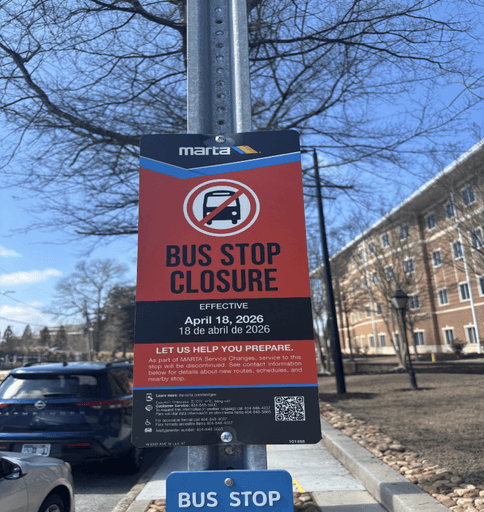
On Apr. 18, several Metropolitan Atlanta Rapid Transit Authority (MARTA) buses serving Spelman and the greater AUC community will be rerouted or discontinued. MARTA serves Fulton, DeKalb and Clayton counties. Established in 1965 with the passing of the Metropolitan Atlanta Rapid Transit Authority Act, MARTA is a long-standing element of life in Atlanta.
While these MARTA reroutes or canceled routes are not exclusive to Spelman, the impact they will have on Spelman students is undeniable. This school year, Spelman only guarantees on-campus housing for first-year students. Even sophomore students who are guaranteed school-sponsored housing may not end up in on campus dorms, forcing students to find their own transportation to get to and from school.
Unlike other Atlanta Metropolitan campuses like George Tech, Spelman currently does not have a designated shuttle to provide transport to students living in school-sponsored housing off campus. This lack of accessible transportation can add on approximately $450 to $2,500 a semester for students who must obtain transportation in the form of rideshare or car costs.
“Living off campus has negatively impacted my access to career and social events at Spelman College. Notice of events are often sent on the same day or a few days prior. In the event one is able to attend, they often have to bank on the day being open, their car being in decent shape, and the finances to cover gas and campus parking fares,” senior Psychology major Rahja Francis said.
In addition to the monetary costs, lack of transportation around the AUC also harms the environment.
As Spelman rebuilds historic dorms like Manley and Howard-Harreld Halls, more upperclasswomen will be forced to live off campus and commute to school. Car storage at Spelman is already a concern during busy events like parents weekend, homecoming and junior preview day where commuting students struggled to find on campus parking that they paid for through semester parking passes.
“I have found it particularly hard to find parking during school events due to the limited spaces of the Spelman parking garage. I believe Spelman is quite limited when it comes to parking spaces offered. I often find myself having to turn around at the gates and pivot to Morehouse for parking space. The cost of parking is also more affordable just a corner step away,” Francis said.
The solution to Spelman’s transportation problem is not more parking decks or decreasing enrollment of incoming classes, but Spelman-specific transportation. Instead of relying on the City of Atlanta to provide transportation through MARTA, Spelman should embrace eco-feminism by creating systems that are specifically for Spelmanites.
Instead of pushing back against a hybrid commuter-residential model, Spelman needs to recognize that having commuter students is now an ingrained part of the college experience.
“I think that [MARTA] is super important and helpful for college students. If it was safer and more reliable I would totally use it instead of an Uber,” first-year Computer Science Major Anaya Ahanotu said.
While some may point to the AUC Library Shuttle as proof that Spelman is doing its part to support student transportation and accessibility, more can and should be done.
Emory University, which is also in the metro Atlanta area, provides free or heavily discounted parking passes for students and faculty who carpool with at least three other people. Through providing similar incentives at Spelman, the college can incentivize eco-friendly transportation and connection between commuter students.
Although the AUC library shuttle is a step in the right direction, it faces many limitations. The AUC shuttle is limited based on library hours, staffing and coordinating bus routes with Clark Atlanta University and Morehouse College; however, most schools are now offering shuttles that operate 24-seven.
In the new college admissions landscape, Spelman needs to remain competitive by not only offering a collaborative, commuter and residential student experience, but also making Spelman more affordable. The additional cost students incur by having to drive to, and from campus could easily be solved by having a shuttle that travels to off-campus housing. The effectiveness of a commuter shuttle system can be seen at universities like Duke, Stanford and Vanderbilt, where students are able to live off campus and still receive campus transportation to and from school for events, classes and social gatherings.
As college admissions at Spelman continue to grow, there is no excuse for Spelman to continue to struggle to accommodate larger classes of students. The solution is not to force students to calculate transportation costs when deciding whether or not to attend Spelman, but to embrace having a hybrid campus focused on the accessibility and access of both commuter and residential students.
While the reroute and cancellation of Marta bus routes around Spelman is unfortunate, it offers an opportunity for Spelman and the AUC as a whole to reevaluate transportation and center ecofeminism as part of Spelman’s mission and appeal for current and future students.
On Apr. 18, several Metropolitan Atlanta Rapid Transit Authority (MARTA) buses serving Spelman and the greater AUC community will be rerouted or discontinued. MARTA serves Fulton, DeKalb and Clayton counties. Established in 1965 with the passing of the Metropolitan Atlanta Rapid Transit Authority Act, MARTA is a long-standing element of life in Atlanta.
While these MARTA reroutes or canceled routes are not exclusive to Spelman, the impact they will have on Spelman students is undeniable. This school year, Spelman only guarantees on-campus housing for first-year students. Even sophomore students who are guaranteed school-sponsored housing may not end up in on campus dorms, forcing students to find their own transportation to get to and from school.
Unlike other Atlanta Metropolitan campuses like George Tech, Spelman currently does not have a designated shuttle to provide transport to students living in school-sponsored housing off campus. This lack of accessible transportation can add on approximately $450 to $2,500 a semester for students who must obtain transportation in the form of rideshare or car costs.
“Living off campus has negatively impacted my access to career and social events at Spelman College. Notice of events are often sent on the same day or a few days prior. In the event one is able to attend, they often have to bank on the day being open, their car being in decent shape, and the finances to cover gas and campus parking fares,” senior Psychology major Rahja Francis said.
In addition to the monetary costs, lack of transportation around the AUC also harms the environment.
As Spelman rebuilds historic dorms like Manley and Howard-Harreld Halls, more upperclasswomen will be forced to live off campus and commute to school. Car storage at Spelman is already a concern during busy events like parents weekend, homecoming and junior preview day where commuting students struggled to find on campus parking that they paid for through semester parking passes.
“I have found it particularly hard to find parking during school events due to the limited spaces of the Spelman parking garage. I believe Spelman is quite limited when it comes to parking spaces offered. I often find myself having to turn around at the gates and pivot to Morehouse for parking space. The cost of parking is also more affordable just a corner step away,” Francis said.
The solution to Spelman’s transportation problem is not more parking decks or decreasing enrollment of incoming classes, but Spelman-specific transportation. Instead of relying on the City of Atlanta to provide transportation through MARTA, Spelman should embrace eco-feminism by creating systems that are specifically for Spelmanites.
Instead of pushing back against a hybrid commuter-residential model, Spelman needs to recognize that having commuter students is now an ingrained part of the college experience.
“I think that [MARTA] is super important and helpful for college students. If it was safer and more reliable I would totally use it instead of an Uber,” first-year Computer Science Major Anaya Ahanotu said.
While some may point to the AUC Library Shuttle as proof that Spelman is doing its part to support student transportation and accessibility, more can and should be done.
Emory University, which is also in the metro Atlanta area, provides free or heavily discounted parking passes for students and faculty who carpool with at least three other people. Through providing similar incentives at Spelman, the college can incentivize eco-friendly transportation and connection between commuter students.
Although the AUC library shuttle is a step in the right direction, it faces many limitations. The AUC shuttle is limited based on library hours, staffing and coordinating bus routes with Clark Atlanta University and Morehouse College; however, most schools are now offering shuttles that operate 24-seven.
In the new college admissions landscape, Spelman needs to remain competitive by not only offering a collaborative, commuter and residential student experience, but also making Spelman more affordable. The additional cost students incur by having to drive to, and from campus could easily be solved by having a shuttle that travels to off-campus housing. The effectiveness of a commuter shuttle system can be seen at universities like Duke, Stanford and Vanderbilt, where students are able to live off campus and still receive campus transportation to and from school for events, classes and social gatherings.
As college admissions at Spelman continue to grow, there is no excuse for Spelman to continue to struggle to accommodate larger classes of students. The solution is not to force students to calculate transportation costs when deciding whether or not to attend Spelman, but to embrace having a hybrid campus focused on the accessibility and access of both commuter and residential students.
While the reroute and cancellation of Marta bus routes around Spelman is unfortunate, it offers an opportunity for Spelman and the AUC as a whole to reevaluate transportation and center ecofeminism as part of Spelman’s mission and appeal for current and future students.