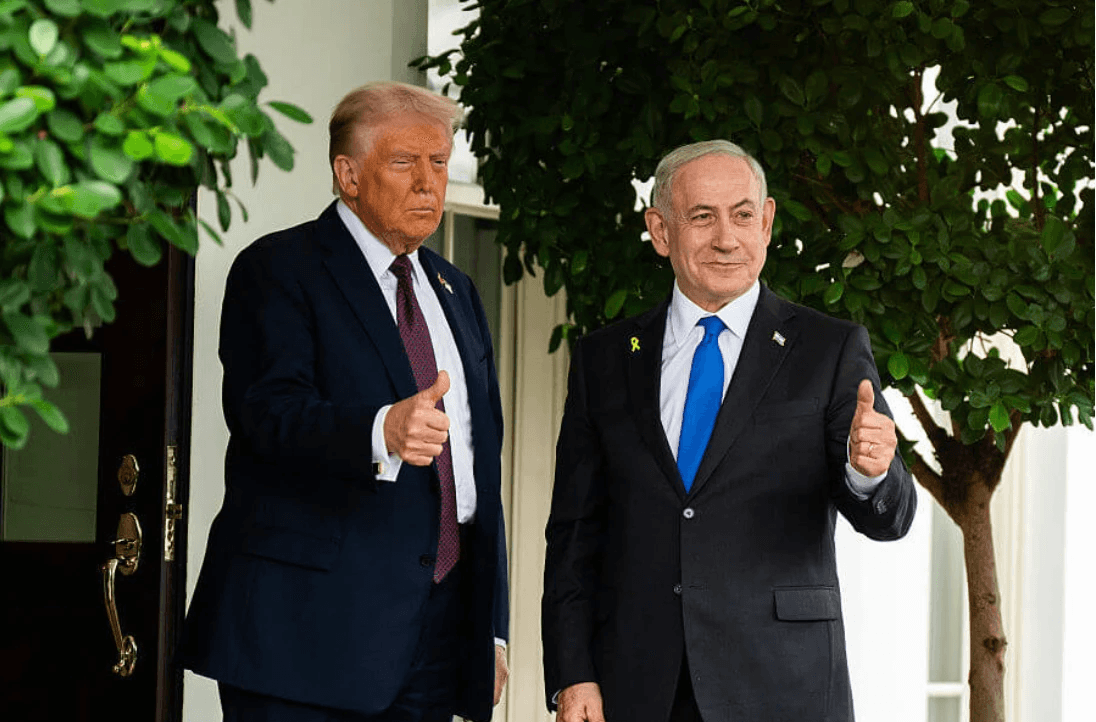
Demetrius Freeman/The Washington Post via Getty Images
Demetrius Freeman/The Washington Post via Getty Images
Israel First: When is Enough, Enough?
Israel First: When is Enough, Enough?
On Feb. 28, the United States, in coordination with Israel, launched a series of ballistic missile strikes targeting multiple cities across Iran.
According to reports from the Iranian Red Crescent, 24 out of Iran’s 31 provinces were affected by the coordinated strikes. Approximately two hours into the operation, Israel received its first warning of incoming missiles. Following this, explosions were reported in Bahrain, Abu Dhabi and Qatar, areas that host U.S. military bases.
The U.S. and Israel have had a ‘special relationship’ since Israel’s founding in 1948. In 1967, the U.S became a military ally of Israel, providing billions of dollars in aid and support despite rising tensions within the Middle East.
While all U.S. presidents since 1948 have recognized Israel, several administrations deliberately distanced themselves or pressured Israel over policies like settlement expansion or military actions.
Notably, Eisenhower, who demanded a full Israeli withdrawal from the Sinai Peninsula and Gaza; Ford, who delayed crucial arms shipments to Israel to pressure them into signing a disengagement agreement; and Bush, who withheld $10 billion in loan guarantees, intended for immigrant absorption, unless Israel agreed to stop building settlements in the occupied territories.
However, the relationship has tightened significantly under the Trump administration, with the U.S. acting as a primary ally in regional security, approving major arms sales and supporting efforts to reshape Middle Eastern stability.
Israel benefits the U.S. primarily as a strategic, intelligence and military ally in the Middle East, in addition to significant economic and technological collaboration. The prioritization of the United States' financial and military supremacy overseas is the backbone of the continued America-Israel relationship.
It is sustained by American Israel Public Affairs Committee (AIPAC)-funded politicians, preventing change when they are beholden to the blood money in their pockets. In the 2024 election cycle, AIPAC proudly claims to have financially supported 361 Democratic and Republican candidates with more than $53 million in direct support.
As a result, when Congress votes on legislation supporting Israel, such as the 2026 National Defense Authorization Act, which allocated more than $4 billion for Israeli defense initiatives, the bills often pass with substantial backing.
I do not find it ironic that, during America 250 — the semiquincentennial year marking the anniversary of the signing of the Declaration of Independence — America is engaged in the conquest of another country. In a post on Truth Social, Donald Trump clearly states, “the hour of your freedom is at hand,” referring to the Iranian people.
Imperialism has historically been backed by religious vindication. For America, that reasoning has always been a form of Christian nationalism, used to justify the conquest of indigenous land, the enforcement of slavery, the marginalization of non-Christians in Southeast Asia and now intervention in the Middle East.
When it comes to religious justification, the question becomes: where is compassion?
One of the most heart-wrenching tragedies amidst the ongoing strikes is the devastation inflicted on the Shajareh Tayyebeh girls' school in Minab, Iran, where at least 100 young girls were killed. Many others remain unaccounted for.
As attendees of an all-girls school, we should feel moved to empathize with young girls like ourselves, who were killed in pursuit of their education.
The military operation responsible for the growing number of tragic losses has been callously named “Operation Epic Fury” via an X post by the Pentagon and the Department of War, formerly the Department of Defense.
This insensitive title, seemingly influenced by extreme right-wing chatroom culture, pays no regard to foreign lives already lost and the inevitable American casualties.
“Trump indoctrinates people based on fear and Christian nationalism, not substance. He targets and attacks insecure populations– he makes people feel important and better than, and uses that ‘joy’ to encourage deadly, hateful ideas,” sophomore Biology major Cecily Kingsley-Williams said.
“The lives of courageous American heroes may be lost, and we may have casualties,” Trump said in a Truth Social video posted to social media early Saturday morning. “That often happens in war.”
His impassiveness underscores the tragic reality of violent conflict, leaving us to ponder the moral implications of such military operations.
Donald Trump is now the first United States president to bomb eight countries in a year: Somalia, Iraq, Nigeria, Syria, Venezuela, Yemen, Palestine and now Iran.
It seems that the Trump administration will apply whatever narrative is applicable to their situation: restoring foreign governments, protecting America or disarming nuclear weapons. To justify this attack, Trump has declared it is about peace.
On Truth Social, Trump said “The heavy and pinpoint bombing, however, will continue, uninterrupted throughout the week or, as long as necessary to achieve our objective of peace throughout the Middle East and, indeed, the World!”
I believe these foreign policy decisions were never about restoring governments. These fruitless wars have only been about taking rights, liberty and property. The idea of disarming individuals of the rights promised to them — even since the founding of America — is exactly what the Trump administration represents.
Now, 405 days into Trump’s second term, we have witnessed a consistent abuse of government power, such as ICE's actions, the manipulation of the Epstein Files, the 43-day government shutdown and the withholding of welfare assistance. This administration seems uninterested in the real problems faced by ordinary Americans, instead focusing on the 1% who benefit from senseless violence and greed.
In times of disarray, when political extremism is widespread, and it seems that Americans can never find common ground, we must remember that the children of the elite are not going to war. They do not face a lack of access to Medicare or essential services. They are not burdened by environmental racism, voter restrictions or the challenges of living in war-torn communities.
As citizens, and more importantly, women who have decided to make a choice to change the world, we have to make ourselves aware of the horrors of the world, even those at the hands of our own government. It is time to ask ourselves: when is enough, enough?
On Feb. 28, the United States, in coordination with Israel, launched a series of ballistic missile strikes targeting multiple cities across Iran.
According to reports from the Iranian Red Crescent, 24 out of Iran’s 31 provinces were affected by the coordinated strikes. Approximately two hours into the operation, Israel received its first warning of incoming missiles. Following this, explosions were reported in Bahrain, Abu Dhabi and Qatar, areas that host U.S. military bases.
The U.S. and Israel have had a ‘special relationship’ since Israel’s founding in 1948. In 1967, the U.S became a military ally of Israel, providing billions of dollars in aid and support despite rising tensions within the Middle East.
While all U.S. presidents since 1948 have recognized Israel, several administrations deliberately distanced themselves or pressured Israel over policies like settlement expansion or military actions.
Notably, Eisenhower, who demanded a full Israeli withdrawal from the Sinai Peninsula and Gaza; Ford, who delayed crucial arms shipments to Israel to pressure them into signing a disengagement agreement; and Bush, who withheld $10 billion in loan guarantees, intended for immigrant absorption, unless Israel agreed to stop building settlements in the occupied territories.
However, the relationship has tightened significantly under the Trump administration, with the U.S. acting as a primary ally in regional security, approving major arms sales and supporting efforts to reshape Middle Eastern stability.
Israel benefits the U.S. primarily as a strategic, intelligence and military ally in the Middle East, in addition to significant economic and technological collaboration. The prioritization of the United States' financial and military supremacy overseas is the backbone of the continued America-Israel relationship.
It is sustained by American Israel Public Affairs Committee (AIPAC)-funded politicians, preventing change when they are beholden to the blood money in their pockets. In the 2024 election cycle, AIPAC proudly claims to have financially supported 361 Democratic and Republican candidates with more than $53 million in direct support.
As a result, when Congress votes on legislation supporting Israel, such as the 2026 National Defense Authorization Act, which allocated more than $4 billion for Israeli defense initiatives, the bills often pass with substantial backing.
I do not find it ironic that, during America 250 — the semiquincentennial year marking the anniversary of the signing of the Declaration of Independence — America is engaged in the conquest of another country. In a post on Truth Social, Donald Trump clearly states, “the hour of your freedom is at hand,” referring to the Iranian people.
Imperialism has historically been backed by religious vindication. For America, that reasoning has always been a form of Christian nationalism, used to justify the conquest of indigenous land, the enforcement of slavery, the marginalization of non-Christians in Southeast Asia and now intervention in the Middle East.
When it comes to religious justification, the question becomes: where is compassion?
One of the most heart-wrenching tragedies amidst the ongoing strikes is the devastation inflicted on the Shajareh Tayyebeh girls' school in Minab, Iran, where at least 100 young girls were killed. Many others remain unaccounted for.
As attendees of an all-girls school, we should feel moved to empathize with young girls like ourselves, who were killed in pursuit of their education.
The military operation responsible for the growing number of tragic losses has been callously named “Operation Epic Fury” via an X post by the Pentagon and the Department of War, formerly the Department of Defense.
This insensitive title, seemingly influenced by extreme right-wing chatroom culture, pays no regard to foreign lives already lost and the inevitable American casualties.
“Trump indoctrinates people based on fear and Christian nationalism, not substance. He targets and attacks insecure populations– he makes people feel important and better than, and uses that ‘joy’ to encourage deadly, hateful ideas,” sophomore Biology major Cecily Kingsley-Williams said.
“The lives of courageous American heroes may be lost, and we may have casualties,” Trump said in a Truth Social video posted to social media early Saturday morning. “That often happens in war.”
His impassiveness underscores the tragic reality of violent conflict, leaving us to ponder the moral implications of such military operations.
Donald Trump is now the first United States president to bomb eight countries in a year: Somalia, Iraq, Nigeria, Syria, Venezuela, Yemen, Palestine and now Iran.
It seems that the Trump administration will apply whatever narrative is applicable to their situation: restoring foreign governments, protecting America or disarming nuclear weapons. To justify this attack, Trump has declared it is about peace.
On Truth Social, Trump said “The heavy and pinpoint bombing, however, will continue, uninterrupted throughout the week or, as long as necessary to achieve our objective of peace throughout the Middle East and, indeed, the World!”
I believe these foreign policy decisions were never about restoring governments. These fruitless wars have only been about taking rights, liberty and property. The idea of disarming individuals of the rights promised to them — even since the founding of America — is exactly what the Trump administration represents.
Now, 405 days into Trump’s second term, we have witnessed a consistent abuse of government power, such as ICE's actions, the manipulation of the Epstein Files, the 43-day government shutdown and the withholding of welfare assistance. This administration seems uninterested in the real problems faced by ordinary Americans, instead focusing on the 1% who benefit from senseless violence and greed.
In times of disarray, when political extremism is widespread, and it seems that Americans can never find common ground, we must remember that the children of the elite are not going to war. They do not face a lack of access to Medicare or essential services. They are not burdened by environmental racism, voter restrictions or the challenges of living in war-torn communities.
As citizens, and more importantly, women who have decided to make a choice to change the world, we have to make ourselves aware of the horrors of the world, even those at the hands of our own government. It is time to ask ourselves: when is enough, enough?