Getty Images
Getty Images
From the Court to the Catwalk: What the Angel Reese Backlash Reveals About Misogynoir
From the Court to the Catwalk: What the Angel Reese Backlash Reveals About Misogynoir
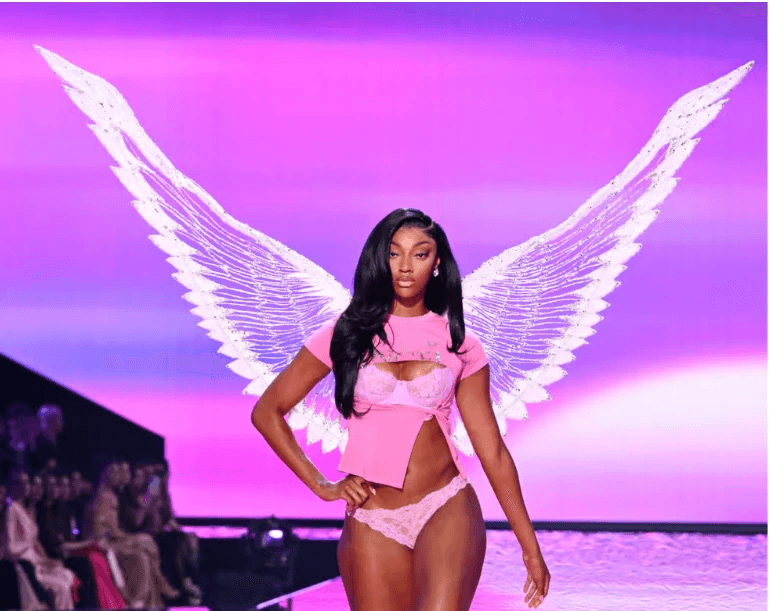
On Oct. 15, 2025, professional basketball star Angel Reese made history by walking in the Victoria’s Secret World Tour show, becoming the first professional athlete to do so. Reese was joined by other “non-model” models, such as Olympic gymnast Suni Lee and popular influencer Quenlin Blackwell. Reese, however, received vitriolic criticism, with her announcement met by an intense wave of backlash.
Critics argued that she was not “classy” enough or that Victoria’s Secret Angels should have “impossible” bodies, claims that reveal far more about entrenched, racialized beauty standards than about Reese herself.
“When I saw those comments, I was livid,” sophomore Tajé George said. “People weren’t mad about her outfit; they were mad that a toned Black woman got a chance to shine. It reminded me that the body of a Black woman is always going to be monitored and policed, especially from a young age.”
Victoria’s Secret has never represented the height of class, and the modeling industry, often marked by scandal and inequity, has rarely offered moral high ground. The irony is that those quick to label Reese “unclassy” overlook the industry’s long history of exclusion and exploitation. The discomfort surrounding her debut exposes a broader unease with Black women embodying femininity and desirability on mainstream fashion stages. Despite the brand’s attempts to modernize, the reaction to Reese demonstrates that thinly veiled racism and misogynoir still shape how the public interprets Black women’s success.
“What they really wanted to say,” Micah Fleming said. “is that she’s too Black. Angel’s tall, elegant and athletic, but her version of beauty doesn’t fit their white, fragile standard.”
What makes Reese’s accomplishment even more significant is that she is excelling across arenas rarely open to the same kind of woman. The Victoria’s Secret runway, once one of fashion’s most coveted stages, represents a level of prestige many career models spend years trying to reach. For Reese, stepping onto it was not a departure from her athletic identity but an expansion of it. Her success is proof that strength and style, competition and confidence, can coexist in one body.
“Angel Reese is literally unattainable,” said Sydney Mitchell. “She’s six-foot-three with a body built by years of training, and that’s what makes her stand out. But people can’t see past her skin tone to appreciate the work. They act like she doesn’t belong because she’s redefining what belonging looks like.”
Reese, an NCAA champion, Final Four MVP and now a WNBA player, has achieved a level of physical excellence few could ever attain. Her body is precisely the kind of rare, unattainable physique critics claim to admire in supermodels. The hostility toward her suggests that the real issue is not whether she meets modeling standards but that her Blackness challenges the archetype of beauty those standards were built upon.
To understand this reaction, we have to name it: misogynoir. Coined by scholar Moya Bailey, the term describes the intersection of racism and misogyny that uniquely targets Black women. Misogynoir operates by recasting confidence as arrogance, power as aggression, and visibility as a threat. When Black women step into spaces of prominence, whether in sports, art, or fashion, their presence is treated as a disruption rather than inclusion.
The reaction to Reese echoes the pattern faced by other elite Black women athletes like Serena Williams and Simone Biles. For years, Williams was described as “too muscular” or “manlike,” her strength turned into a weapon against her femininity. Even when she appeared in couture or high-fashion editorials, critics insisted she looked “unladylike” or “angry.”
Similarly, Biles has spoken about feeling pressured to hide her arms and tone down her athletic build to avoid being called masculine. These athletes’ experiences show that the issue is not with individual women but with a cultural lens that filters Black womanhood through stereotypes of aggression, dominance, and strength, qualities celebrated in male athletes but condemned when embodied by women.
“People still associate whiteness with purity and class, as if being sexy or visible makes Black women less worthy of admiration,” Jess Andrews said.
Reese’s experience reflects that same double standard. From her college career onward, her confidence has been mislabeled as arrogance and her competitiveness mistaken for a lack of grace. Now, as she enters the fashion world after gracing the cover of Vogue, attending the Met Gala, and launching several clothing lines, critics suddenly claim she is “not ready” or “doesn’t belong.”
The contradiction is clear: when Black women step into industries built on desirability, they are told their presence distorts the image rather than expands it.
The backlash against Reese is not about lingerie or modeling standards. It is about the discomfort people feel when a Black woman transcends the boundaries placed around her. Reese represents a modern evolution of womanhood: athletic, confident, glamorous and unapologetically visible. Her success on the runway forces a reckoning with the hierarchies of beauty and worth that continue to privilege whiteness and fragility.
Angel Reese’s presence was not an anomaly; it was a necessary disruption. Her body, her confidence and her visibility assert that Black women can be both strong and feminine, athletic and beautiful, powerful and graceful. The vitriol she faces only underscores why her visibility matters and why expanding definitions of beauty remains an act of resistance.
On Oct. 15, 2025, professional basketball star Angel Reese made history by walking in the Victoria’s Secret World Tour show, becoming the first professional athlete to do so. Reese was joined by other “non-model” models, such as Olympic gymnast Suni Lee and popular influencer Quenlin Blackwell. Reese, however, received vitriolic criticism, with her announcement met by an intense wave of backlash.
Critics argued that she was not “classy” enough or that Victoria’s Secret Angels should have “impossible” bodies, claims that reveal far more about entrenched, racialized beauty standards than about Reese herself.
“When I saw those comments, I was livid,” sophomore Tajé George said. “People weren’t mad about her outfit; they were mad that a toned Black woman got a chance to shine. It reminded me that the body of a Black woman is always going to be monitored and policed, especially from a young age.”
Victoria’s Secret has never represented the height of class, and the modeling industry, often marked by scandal and inequity, has rarely offered moral high ground. The irony is that those quick to label Reese “unclassy” overlook the industry’s long history of exclusion and exploitation. The discomfort surrounding her debut exposes a broader unease with Black women embodying femininity and desirability on mainstream fashion stages. Despite the brand’s attempts to modernize, the reaction to Reese demonstrates that thinly veiled racism and misogynoir still shape how the public interprets Black women’s success.
“What they really wanted to say,” Micah Fleming said. “is that she’s too Black. Angel’s tall, elegant and athletic, but her version of beauty doesn’t fit their white, fragile standard.”
What makes Reese’s accomplishment even more significant is that she is excelling across arenas rarely open to the same kind of woman. The Victoria’s Secret runway, once one of fashion’s most coveted stages, represents a level of prestige many career models spend years trying to reach. For Reese, stepping onto it was not a departure from her athletic identity but an expansion of it. Her success is proof that strength and style, competition and confidence, can coexist in one body.
“Angel Reese is literally unattainable,” said Sydney Mitchell. “She’s six-foot-three with a body built by years of training, and that’s what makes her stand out. But people can’t see past her skin tone to appreciate the work. They act like she doesn’t belong because she’s redefining what belonging looks like.”
Reese, an NCAA champion, Final Four MVP and now a WNBA player, has achieved a level of physical excellence few could ever attain. Her body is precisely the kind of rare, unattainable physique critics claim to admire in supermodels. The hostility toward her suggests that the real issue is not whether she meets modeling standards but that her Blackness challenges the archetype of beauty those standards were built upon.
To understand this reaction, we have to name it: misogynoir. Coined by scholar Moya Bailey, the term describes the intersection of racism and misogyny that uniquely targets Black women. Misogynoir operates by recasting confidence as arrogance, power as aggression, and visibility as a threat. When Black women step into spaces of prominence, whether in sports, art, or fashion, their presence is treated as a disruption rather than inclusion.
The reaction to Reese echoes the pattern faced by other elite Black women athletes like Serena Williams and Simone Biles. For years, Williams was described as “too muscular” or “manlike,” her strength turned into a weapon against her femininity. Even when she appeared in couture or high-fashion editorials, critics insisted she looked “unladylike” or “angry.”
Similarly, Biles has spoken about feeling pressured to hide her arms and tone down her athletic build to avoid being called masculine. These athletes’ experiences show that the issue is not with individual women but with a cultural lens that filters Black womanhood through stereotypes of aggression, dominance, and strength, qualities celebrated in male athletes but condemned when embodied by women.
“People still associate whiteness with purity and class, as if being sexy or visible makes Black women less worthy of admiration,” Jess Andrews said.
Reese’s experience reflects that same double standard. From her college career onward, her confidence has been mislabeled as arrogance and her competitiveness mistaken for a lack of grace. Now, as she enters the fashion world after gracing the cover of Vogue, attending the Met Gala, and launching several clothing lines, critics suddenly claim she is “not ready” or “doesn’t belong.”
The contradiction is clear: when Black women step into industries built on desirability, they are told their presence distorts the image rather than expands it.
The backlash against Reese is not about lingerie or modeling standards. It is about the discomfort people feel when a Black woman transcends the boundaries placed around her. Reese represents a modern evolution of womanhood: athletic, confident, glamorous and unapologetically visible. Her success on the runway forces a reckoning with the hierarchies of beauty and worth that continue to privilege whiteness and fragility.
Angel Reese’s presence was not an anomaly; it was a necessary disruption. Her body, her confidence and her visibility assert that Black women can be both strong and feminine, athletic and beautiful, powerful and graceful. The vitriol she faces only underscores why her visibility matters and why expanding definitions of beauty remains an act of resistance.