Grace Barlow
Grace Barlow
Nobody warned me that studying abroad would feel like starting over. Not linguistically. I speak Spanish. I had spent years conjugating verbs, learning the cadence of Castilian, preparing to move through Madrid like I belonged. What I did not prepare for was how little any of that would matter the moment a stranger on the metro fixed their eyes on me like I was something to be decoded. Like I was the anomaly in a city that had simply never had to make room for me.
I am a Spelmanite. I say that first because it matters most. I grew as a journalist, and carried everything Spelman poured into me across an ocean to Madrid. I came here as a storyteller. And I came here as a Black woman who had spent three years at an institution that told me, every single day, that my mind was powerful and my presence was necessary. Madrid has been a test of whether I actually believed that.
The test started immediately.
Spain is not a post-racial utopia. It is a country in the middle of a fierce reckoning with race, immigration and national identity. The far right is louder here than it has been in decades. Debates about who belongs, whose culture deserves protection, and which bodies are welcome play out in parliament and on the street simultaneously.
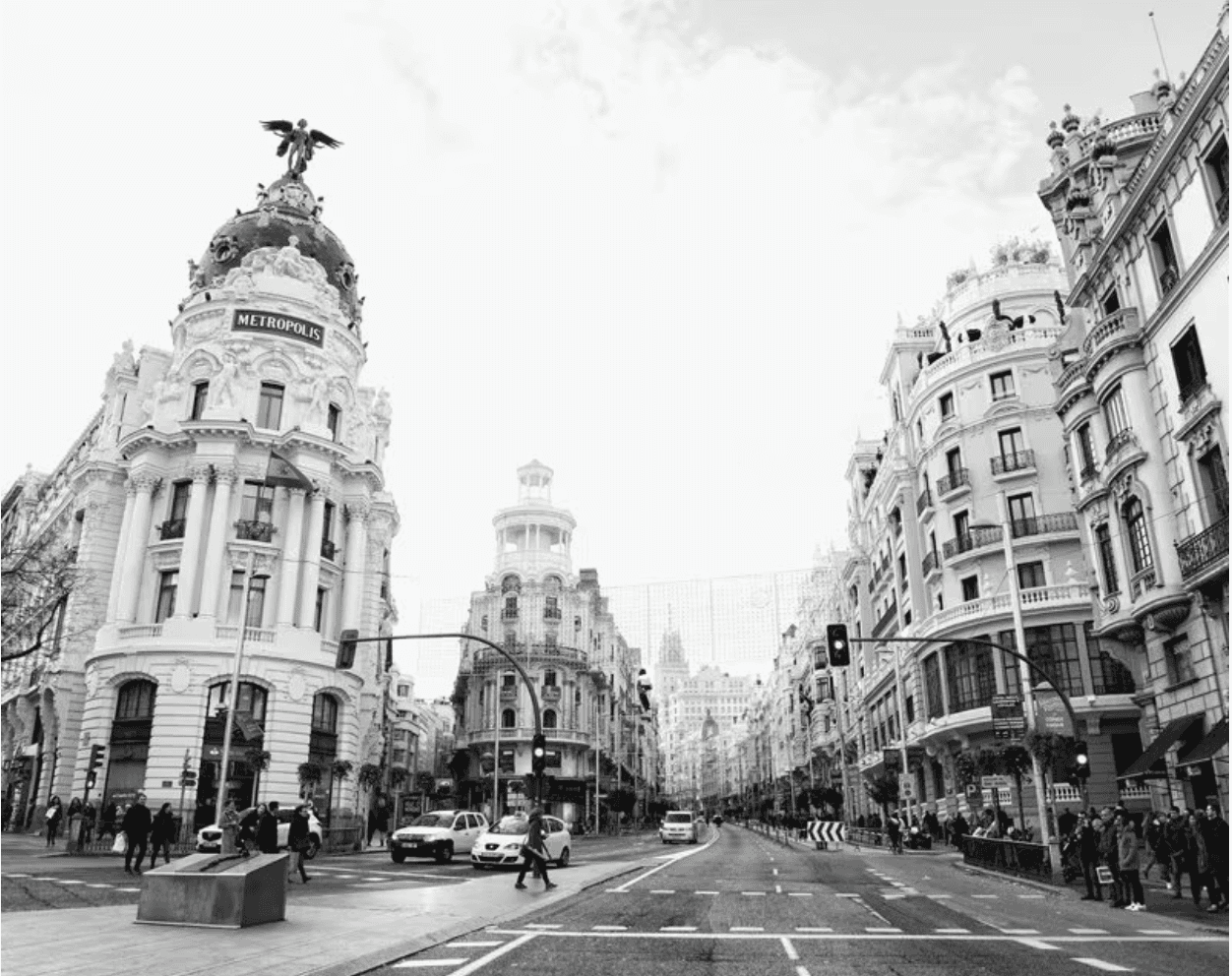
As a Black American woman reporting on this city, I do not get to observe that debate from a distance. I am inside it whether I choose to be or not. My presence is political before I ever pick up a pen. There is a specific kind of exhaustion that comes with being one of the few. It does not announce itself. It accumulates. In the woman on the Calle Gran Vía who pivots to watch me pass. In the shopkeeper who greets every customer before me. My colleague tells me my Spanish is "tan buena para ser americana," or “so good for an American”, as though the surprise is the compliment. I smile. I translate the microaggression into something manageable. I move on. But I notice.
Spelman gave me a baseline of belonging that is hard to name until you leave it. On campus I was surrounded by Black women who were brilliant, driven and unapologetically themselves. I moved through my days without performing my humanity for anyone. Madrid stripped that baseline away, and what grew in its place was something sharper. A clearer sense of who I am when the environment stops confirming it. A fiercer understanding of what it means to carry a Spelman education into a space that was not built to hold it.
Yet, I would not trade this semester for anything. Because something else also happened in Madrid. I reported stories that would not have existed without me in the room. I sat with Moroccan families in Lavapiés who opened up to me in ways they might not have to someone who did not understand, in their bones, what it means to be perceived as foreign in your own city. My Blackness was not a barrier to that work. It was the credential. The world does not need fewer Black journalists with international experience. It needs more Spelman women, everywhere, with passports stamped and notebooks full.
Black students are underrepresented in study abroad programs by a wide margin and the gap is not accidental. It reflects a broader architecture of who gets imagined as a global citizen, whose curiosity about the world gets funded and encouraged, whose discomfort abroad gets treated as a footnote instead of a systemic failure. I understand why some of us hesitate. I understand the calculus of choosing rest over being a spectacle in a foreign country. But I also know what Spelman taught me: that our presence in rooms that were not built for us is never incidental. It is intentional. It is powerful. It is necessary.
The stares on the metro did not stop. The microaggressions did not disappear. The political noise did not quiet down. But I kept showing up, kept reporting, kept writing, kept speaking Spanish in rooms where people did not expect me to. Every time I did, I was making an argument with my body that no opinion piece can fully make on the page: that Black women belong in every city, every conversation, every story worth telling.
Spelman told me my presence was necessary. Madrid proved it.
Nobody warned me that studying abroad would feel like starting over. Not linguistically. I speak Spanish. I had spent years conjugating verbs, learning the cadence of Castilian, preparing to move through Madrid like I belonged. What I did not prepare for was how little any of that would matter the moment a stranger on the metro fixed their eyes on me like I was something to be decoded. Like I was the anomaly in a city that had simply never had to make room for me.
I am a Spelmanite. I say that first because it matters most. I grew as a journalist, and carried everything Spelman poured into me across an ocean to Madrid. I came here as a storyteller. And I came here as a Black woman who had spent three years at an institution that told me, every single day, that my mind was powerful and my presence was necessary. Madrid has been a test of whether I actually believed that.
The test started immediately.
Spain is not a post-racial utopia. It is a country in the middle of a fierce reckoning with race, immigration and national identity. The far right is louder here than it has been in decades. Debates about who belongs, whose culture deserves protection, and which bodies are welcome play out in parliament and on the street simultaneously.
As a Black American woman reporting on this city, I do not get to observe that debate from a distance. I am inside it whether I choose to be or not. My presence is political before I ever pick up a pen. There is a specific kind of exhaustion that comes with being one of the few. It does not announce itself. It accumulates. In the woman on the Calle Gran Vía who pivots to watch me pass. In the shopkeeper who greets every customer before me. My colleague tells me my Spanish is "tan buena para ser americana," or “so good for an American”, as though the surprise is the compliment. I smile. I translate the microaggression into something manageable. I move on. But I notice.
Spelman gave me a baseline of belonging that is hard to name until you leave it. On campus I was surrounded by Black women who were brilliant, driven and unapologetically themselves. I moved through my days without performing my humanity for anyone. Madrid stripped that baseline away, and what grew in its place was something sharper. A clearer sense of who I am when the environment stops confirming it. A fiercer understanding of what it means to carry a Spelman education into a space that was not built to hold it.
Yet, I would not trade this semester for anything. Because something else also happened in Madrid. I reported stories that would not have existed without me in the room. I sat with Moroccan families in Lavapiés who opened up to me in ways they might not have to someone who did not understand, in their bones, what it means to be perceived as foreign in your own city. My Blackness was not a barrier to that work. It was the credential. The world does not need fewer Black journalists with international experience. It needs more Spelman women, everywhere, with passports stamped and notebooks full.
Black students are underrepresented in study abroad programs by a wide margin and the gap is not accidental. It reflects a broader architecture of who gets imagined as a global citizen, whose curiosity about the world gets funded and encouraged, whose discomfort abroad gets treated as a footnote instead of a systemic failure. I understand why some of us hesitate. I understand the calculus of choosing rest over being a spectacle in a foreign country. But I also know what Spelman taught me: that our presence in rooms that were not built for us is never incidental. It is intentional. It is powerful. It is necessary.
The stares on the metro did not stop. The microaggressions did not disappear. The political noise did not quiet down. But I kept showing up, kept reporting, kept writing, kept speaking Spanish in rooms where people did not expect me to. Every time I did, I was making an argument with my body that no opinion piece can fully make on the page: that Black women belong in every city, every conversation, every story worth telling.
Spelman told me my presence was necessary. Madrid proved it.