Nila Roper
Nila Roper
An Evening of Enlightenment: Jason Reynolds Comes To Spelman
An Evening of Enlightenment: Jason Reynolds Comes To Spelman
Nila Roper
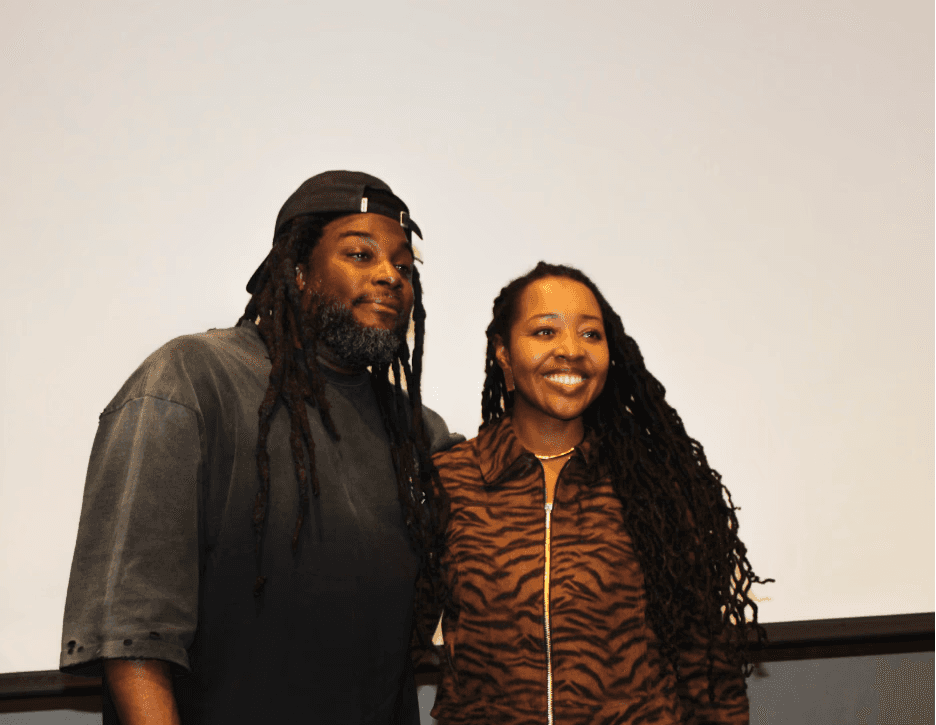
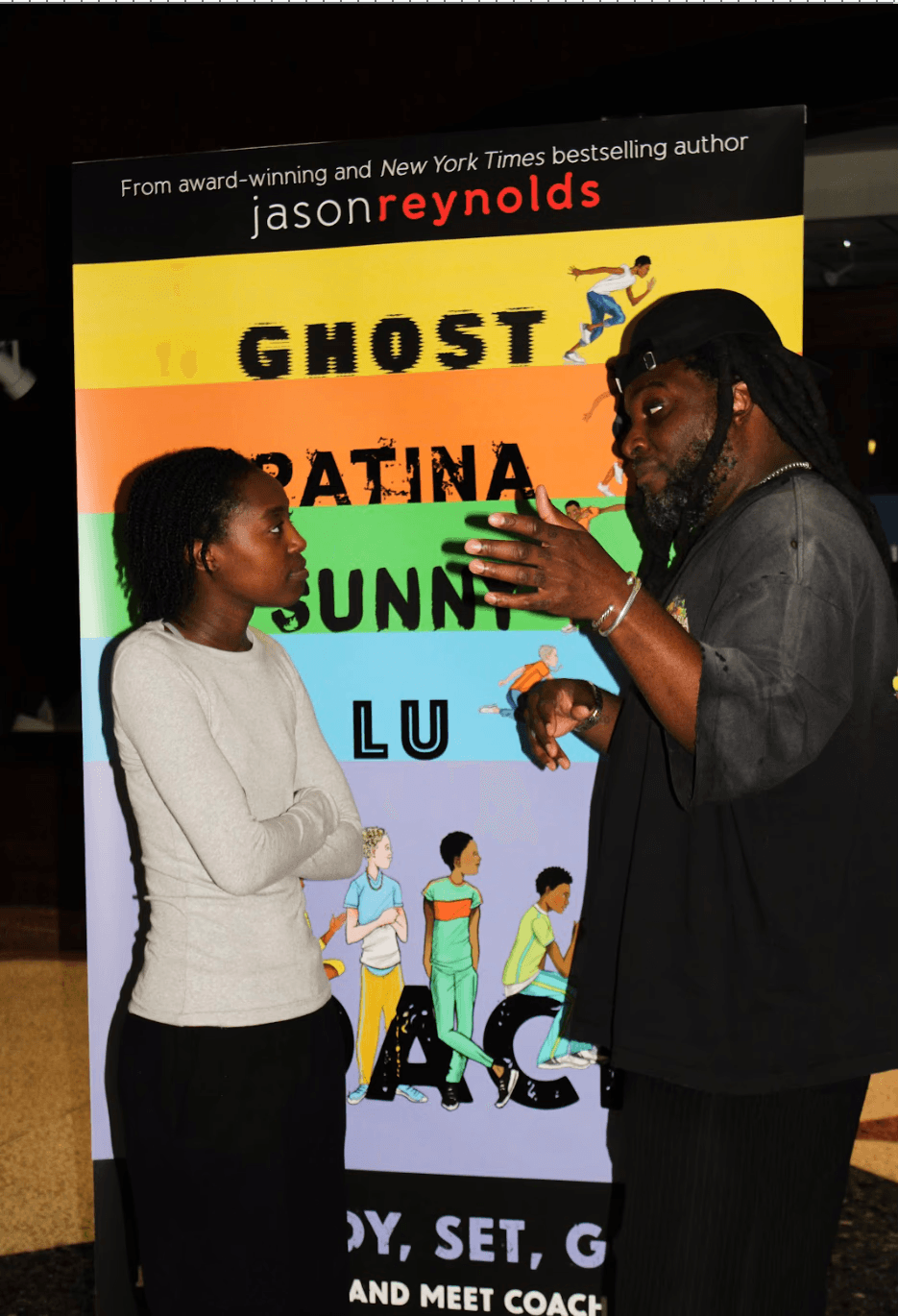
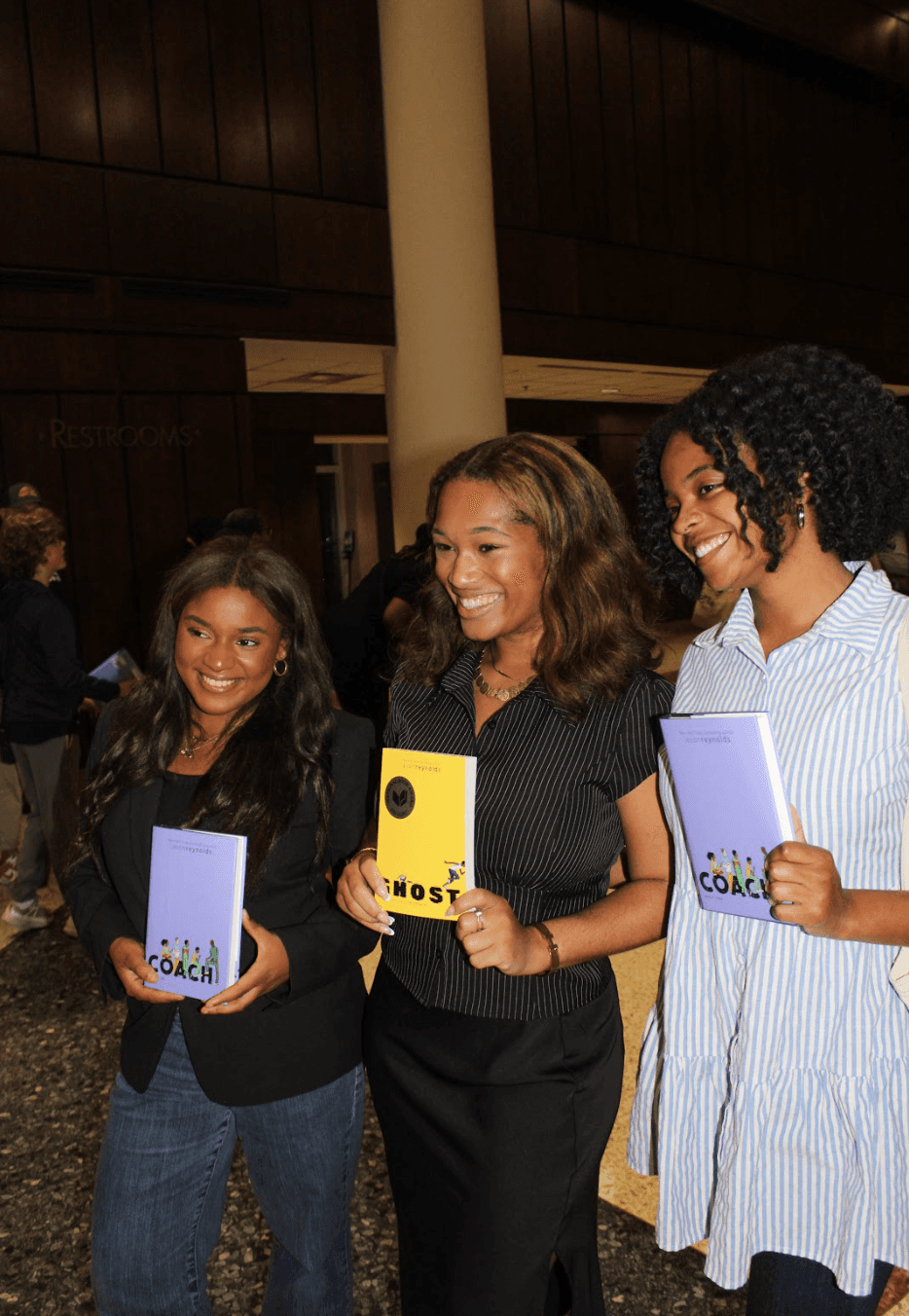
On Friday, Oct. 24, the Literature, Media and Writing Department at Spelman College presented “An Evening of Enlightenment,” a powerful keynote discussion between renowned author Jason Reynolds and accomplished entrepreneur and civic leader, Dr. Lakeysha Hallmon. The event was also hosted in partnership with Page Turners Make Great Learners, a nonprofit literacy organization that aims to foster a love of reading amongst Georgia’s youth, as well as Little Shop of Stories, an independent bookstore based in Decatur.
When Jason Reynolds began writing the acclaimed “Track” book series, he chose to center track & field because it is a relatively accessible sport— it does not require much equipment, and running is an activity most people can participate in.
However, this choice had a deeper meaning: running is an unpleasant activity for many, and no one enjoys the feeling of not being able to catch their breath. For some, this breathlessness and discomfort extends far beyond exercise: many children, especially Black and Brown children in lower-income communities, bear the weight of trauma caused by their past experiences or current environment. Despite these suffocating conditions, they are expected to persevere and excel, like athletes on the track, who constantly strive to beat personal records.
These are the stories Reynolds tells in his novels.
Reynolds is no stranger to these experiences: his childhood in Washington D.C. shapes his work, both the difficult aspects, such as the grief and rage caused by violence, as well as happier aspects, like go-go music. He reflected on his city’s signature genre, and how it felt for him and other D.C. youth to hear their neighborhoods shouted out in go-go songs.
“How it made us feel when I was younger was that the whole city knew we were alive. That the whole city knew we were here. That’s what I want my books to feel like,” Reynolds said.
Reynolds is an established name in the young-adult literature space. However, his career taking off was happenstance; the result of his talent and drive, but also patience. Reynolds wrote and published about ten books before striking gold: when PBS included his work on a list of America’s 100 most loved books as a part of its “The Great American Read” initiative in 2018.
Reynolds was shocked to find “Ghost,” the first novel in the Track series, on the list, alongside legendary novels like “Beloved” by Toni Morrison and “Invisible Man” by Ralph Ellison. The book had only been released a few months prior, but its feature on the list catapulted Reynolds’ name and work into the public eye. Today, Reynolds has published 25 books and sold about eight million copies, in addition to receiving several awards and recognitions, including the Carnegie Medal for Writing, an NAACP Image Award, and multiple Coretta Scott King awards.
Hallmon considered Reynolds’ big break a moment of divine assignment— there was nothing Reynolds could have done to predict it, other than being disciplined and believing in his craft.
“When it happened, I was ready… I had been working my whole life for that opportunity, and when it came, you know, I took full advantage,” Reynolds said. “I couldn’t choose most of the things that happened to me. It just kind of happened that way. So my job is to justify why it was given to me.”
In “Coach,” the fifth and newest book in the “Track” series, Reynolds explores the complexities of family, particularly the dynamic between the protagonist, Otie, and his father, who is an addict. The book takes place in 1988, a time when crack cocaine devastated Black and Brown communities. With this story, Reynolds sought to combat the shame around addiction and humanize those who struggle with it, an issue that is deeply personal to him— his mother dealt with addiction during his youth, and was still an incredible parent.
Reynolds cares deeply about holding space for people’s imperfections and loving them despite their shortcomings.
“Your mama and your daddy ain't nothing but people… flawed and all. They disappoint you and fail you and let you down. They're going to break you in certain ways, in the same way that they built you, right?” Reynolds said. “At some point in our life, we hope to garner enough fortitude and grace to extend to them, especially when we start breaking and building people ourselves.”
Reynolds expanded on the importance of grace, both in his own life and within larger society.
“I think to not be able to access it is dangerous… I tell everybody, I'm a mess in a masterpiece, heavy on the mess… I'm not an easy person to be around or be friends with,” he said. “So much of my work requires solitude and quiet, silence and a bit of disassociation and disconnect. It's hard to be a friend to a person like that. Unless you love them, and you got grace for them… I know what it is to have been extended grace, abundantly. And I think if we lose it, then we lose our humanity.”
Being an author is not easy. Reynolds is candid about the sacrifice his career requires and the strain put on his mental and physical health, especially the exhaustion of constant traveling and missing out on time with loved ones. Many don’t recognize the emotional labor it entails: writing is always a process of growth and reflection for Reynolds, as he aims to not only assess the world around him, but also decipher who he is and wants to be.
One of his focuses is unpacking notions of masculinity, particularly for Black boys and men: Reynolds wants to live in a world where all Black boys feel safe enough to cry, to enjoy romance novels and crave love in their own lives, all without fearing judgment. The toll that this responsibility takes on him is not without reward: Reynolds spoke about writing himself out of his own dark places and hoping that his stories create a space for an honest conversation with readers, helping liberate them as well.
Reynolds is guided and motivated by several ancestors, such as children’s author Walter Dean Myers, poet Nikki Giovanni and singer D’Angelo. His late father, Allen Reynolds, is his ultimate North Star: he lived a life in service to others, working as a psychiatrist and running a mental health clinic, despite his struggle with depression. Reynolds remembers him as a silly, playful man who always looked for the light in the dark and kept their family entertained.
Joy and laughter are paramount for Reynolds, as he tries to treat work like play.
“You realize when you get a little older that the greatest gift you could give yourself is foolishness. Foolishness is a wonderful, wonderful thing. I believe that I'm much too old to be childish, but I'll never, ever, ever be too old to be childlike. Ever. I just want to have a good time,” he said. “This is what imagination is for. It’s also for creating the world we wanna see, right? Ending all the -isms, working toward a more just and equitable world. But what good is it if you forgot how to have fun?… Make some time for irresponsibility.”
In today’s political climate under the Trump Administration, artists and activists who challenge oppressive structures are being targeted and heavily censored. Reynolds has experienced it firsthand, as several of his novels have been placed on “banned books” lists nationwide. When asked how young writers who aspire to be truth-tellers can navigate today’s media landscape amidst intense suppression, Reynolds spoke about the importance of coordinated protest, disobedience and, above all, audacity.
“When has that ever stopped y’all before? You have to take advantage of the ego of youth,” he said. “Y’all really think you can do everything, and guess what? We are so thankful for it. It gets on our nerves, but we’re grateful. That ego, while you still have it, before the world tries to shake it out of you… say the things. Make us all uncomfortable.”
On Friday, Oct. 24, the Literature, Media and Writing Department at Spelman College presented “An Evening of Enlightenment,” a powerful keynote discussion between renowned author Jason Reynolds and accomplished entrepreneur and civic leader, Dr. Lakeysha Hallmon. The event was also hosted in partnership with Page Turners Make Great Learners, a nonprofit literacy organization that aims to foster a love of reading amongst Georgia’s youth, as well as Little Shop of Stories, an independent bookstore based in Decatur.
When Jason Reynolds began writing the acclaimed “Track” book series, he chose to center track & field because it is a relatively accessible sport— it does not require much equipment, and running is an activity most people can participate in.
However, this choice had a deeper meaning: running is an unpleasant activity for many, and no one enjoys the feeling of not being able to catch their breath. For some, this breathlessness and discomfort extends far beyond exercise: many children, especially Black and Brown children in lower-income communities, bear the weight of trauma caused by their past experiences or current environment. Despite these suffocating conditions, they are expected to persevere and excel, like athletes on the track, who constantly strive to beat personal records.
These are the stories Reynolds tells in his novels.
Reynolds is no stranger to these experiences: his childhood in Washington D.C. shapes his work, both the difficult aspects, such as the grief and rage caused by violence, as well as happier aspects, like go-go music. He reflected on his city’s signature genre, and how it felt for him and other D.C. youth to hear their neighborhoods shouted out in go-go songs.
“How it made us feel when I was younger was that the whole city knew we were alive. That the whole city knew we were here. That’s what I want my books to feel like,” Reynolds said.
Reynolds is an established name in the young-adult literature space. However, his career taking off was happenstance; the result of his talent and drive, but also patience. Reynolds wrote and published about ten books before striking gold: when PBS included his work on a list of America’s 100 most loved books as a part of its “The Great American Read” initiative in 2018.
Reynolds was shocked to find “Ghost,” the first novel in the Track series, on the list, alongside legendary novels like “Beloved” by Toni Morrison and “Invisible Man” by Ralph Ellison. The book had only been released a few months prior, but its feature on the list catapulted Reynolds’ name and work into the public eye. Today, Reynolds has published 25 books and sold about eight million copies, in addition to receiving several awards and recognitions, including the Carnegie Medal for Writing, an NAACP Image Award, and multiple Coretta Scott King awards.
Hallmon considered Reynolds’ big break a moment of divine assignment— there was nothing Reynolds could have done to predict it, other than being disciplined and believing in his craft.
“When it happened, I was ready… I had been working my whole life for that opportunity, and when it came, you know, I took full advantage,” Reynolds said. “I couldn’t choose most of the things that happened to me. It just kind of happened that way. So my job is to justify why it was given to me.”
In “Coach,” the fifth and newest book in the “Track” series, Reynolds explores the complexities of family, particularly the dynamic between the protagonist, Otie, and his father, who is an addict. The book takes place in 1988, a time when crack cocaine devastated Black and Brown communities. With this story, Reynolds sought to combat the shame around addiction and humanize those who struggle with it, an issue that is deeply personal to him— his mother dealt with addiction during his youth, and was still an incredible parent.
Reynolds cares deeply about holding space for people’s imperfections and loving them despite their shortcomings.
“Your mama and your daddy ain't nothing but people… flawed and all. They disappoint you and fail you and let you down. They're going to break you in certain ways, in the same way that they built you, right?” Reynolds said. “At some point in our life, we hope to garner enough fortitude and grace to extend to them, especially when we start breaking and building people ourselves.”
Reynolds expanded on the importance of grace, both in his own life and within larger society.
“I think to not be able to access it is dangerous… I tell everybody, I'm a mess in a masterpiece, heavy on the mess… I'm not an easy person to be around or be friends with,” he said. “So much of my work requires solitude and quiet, silence and a bit of disassociation and disconnect. It's hard to be a friend to a person like that. Unless you love them, and you got grace for them… I know what it is to have been extended grace, abundantly. And I think if we lose it, then we lose our humanity.”
Being an author is not easy. Reynolds is candid about the sacrifice his career requires and the strain put on his mental and physical health, especially the exhaustion of constant traveling and missing out on time with loved ones. Many don’t recognize the emotional labor it entails: writing is always a process of growth and reflection for Reynolds, as he aims to not only assess the world around him, but also decipher who he is and wants to be.
One of his focuses is unpacking notions of masculinity, particularly for Black boys and men: Reynolds wants to live in a world where all Black boys feel safe enough to cry, to enjoy romance novels and crave love in their own lives, all without fearing judgment. The toll that this responsibility takes on him is not without reward: Reynolds spoke about writing himself out of his own dark places and hoping that his stories create a space for an honest conversation with readers, helping liberate them as well.
Reynolds is guided and motivated by several ancestors, such as children’s author Walter Dean Myers, poet Nikki Giovanni and singer D’Angelo. His late father, Allen Reynolds, is his ultimate North Star: he lived a life in service to others, working as a psychiatrist and running a mental health clinic, despite his struggle with depression. Reynolds remembers him as a silly, playful man who always looked for the light in the dark and kept their family entertained.
Joy and laughter are paramount for Reynolds, as he tries to treat work like play.
“You realize when you get a little older that the greatest gift you could give yourself is foolishness. Foolishness is a wonderful, wonderful thing. I believe that I'm much too old to be childish, but I'll never, ever, ever be too old to be childlike. Ever. I just want to have a good time,” he said. “This is what imagination is for. It’s also for creating the world we wanna see, right? Ending all the -isms, working toward a more just and equitable world. But what good is it if you forgot how to have fun?… Make some time for irresponsibility.”
In today’s political climate under the Trump Administration, artists and activists who challenge oppressive structures are being targeted and heavily censored. Reynolds has experienced it firsthand, as several of his novels have been placed on “banned books” lists nationwide. When asked how young writers who aspire to be truth-tellers can navigate today’s media landscape amidst intense suppression, Reynolds spoke about the importance of coordinated protest, disobedience and, above all, audacity.
“When has that ever stopped y’all before? You have to take advantage of the ego of youth,” he said. “Y’all really think you can do everything, and guess what? We are so thankful for it. It gets on our nerves, but we’re grateful. That ego, while you still have it, before the world tries to shake it out of you… say the things. Make us all uncomfortable.”