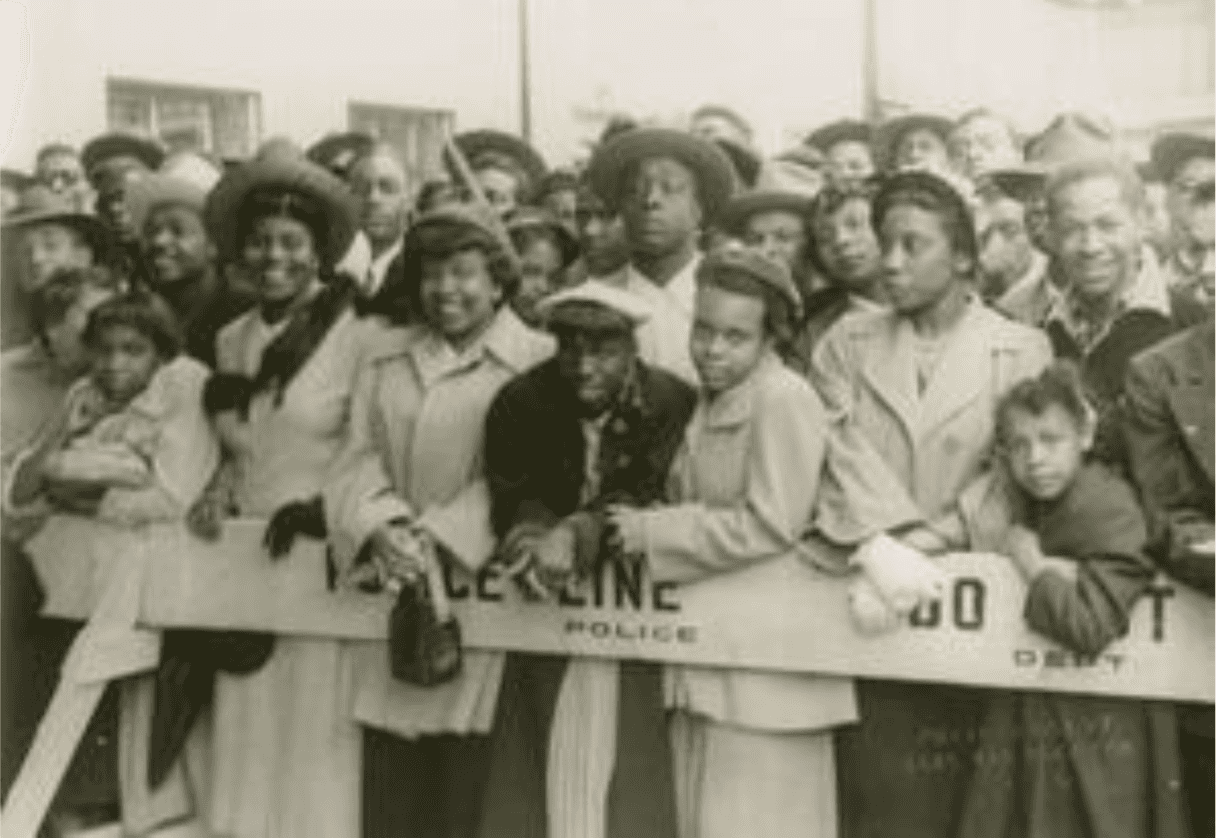
Spelman College Archives
Spelman College Archives
America, Interrupted: One Year Later
America, Interrupted: One Year Later
A year into the Trump administration, America feels like a country still learning how to hear itself. The headlines never stop: immigration bans, government shutdowns, rollbacks on rights. The noise becomes its own kind of normal. Beneath that noise, something deeper is taking shape. Students are learning how to navigate through the chaos without being overwhelmed by it, and how to stay alert in a country that often asks them to look away.
At Spelman, those national shifts feel close. What happens in Washington echoes through classrooms, cafeterias and late-night study sessions. The political becomes personal, and the personal becomes political. It is a rhythm students know well. The intersection of identity and activism has long been where Black women have taken the lead.
Dr. Marilyn Davis, associate professor of political science at Spelman, calls this moment “a turning point in how young voters are being shaped.”
She explains that political socialization, the process through which people form their political beliefs, looks different now than it once did. The influences shaping young voters, she says, now depend on who the young voters are.
“For some, the rise of conservatism among younger generations reflects how families, peers and especially social media shape ideology faster than schools or civic institutions can,” Davis said.
Her words trace a generational shift that feels familiar and new, as what was once defined by party lines is now shaped by algorithms. The power to persuade and to polarize lives is in our hands.
Dr. Cynthia Neal Spence, director of the Social Justice Program, sees that awareness transforming into action.
“Students are living out the mission to merge their intellectual interests with their social justice passions,” she said. “They are not just reading about inequality, they are doing something about it.”
She points to projects like Unlocked Minds, which examines the experiences of women impacted by incarceration, and a period equity initiative that ensures access to free menstrual products across campus.
“They are passionate,” Spence said. “But they also want to move beyond talking, to act, to educate, to make change.”
For Spence, Spelman’s role in this political moment is both protection and preparation.
“We talk about race, equity, and justice without fear,” she said. “We remember who came before us and understand that this moment, like those before it, will need fixers. Spelman women will be among them.”
That sense of purpose resonates deeply with first-year student Trinity Ransome, a political science major and psychology minor from New Jersey.
“Being a college student in Trump’s America means working harder for everything you want, especially as a Black woman,” Ransome said. “You have to set a standard and be a role model, even when society feels somewhat against you.”
She reflects on how Spelman reshapes her political awareness.
“I grew up in a predominantly white community where politics were not really discussed,” she said. “Spelman gave me a broader understanding of our society.”
Her story represents a pattern across campus: awareness giving rise to accountability and frustration becoming a source of fuel.
A year under Trump does not just expose division; it exposes what survives in spite of it. It reveals the durability of those who live through it. The policies, rhetoric and polarization of his presidency not only test democracy but also test its participants. For students at HBCUs, especially at Spelman, they test their discipline, our empathy and belief in the power of progress.
Spelman students come from a lineage of women who have endured worse and still built something better. They stand in a present that demands the same balance of intellect and imagination. They move toward a future that will depend on how they define leadership, not through authority, but through awareness.
One year later, America is still interrupted. But at Spelman, interruption is not the end of the story. It is where the next one begins.
A year into the Trump administration, America feels like a country still learning how to hear itself. The headlines never stop: immigration bans, government shutdowns, rollbacks on rights. The noise becomes its own kind of normal. Beneath that noise, something deeper is taking shape. Students are learning how to navigate through the chaos without being overwhelmed by it, and how to stay alert in a country that often asks them to look away.
At Spelman, those national shifts feel close. What happens in Washington echoes through classrooms, cafeterias and late-night study sessions. The political becomes personal, and the personal becomes political. It is a rhythm students know well. The intersection of identity and activism has long been where Black women have taken the lead.
Dr. Marilyn Davis, associate professor of political science at Spelman, calls this moment “a turning point in how young voters are being shaped.”
She explains that political socialization, the process through which people form their political beliefs, looks different now than it once did. The influences shaping young voters, she says, now depend on who the young voters are.
“For some, the rise of conservatism among younger generations reflects how families, peers and especially social media shape ideology faster than schools or civic institutions can,” Davis said.
Her words trace a generational shift that feels familiar and new, as what was once defined by party lines is now shaped by algorithms. The power to persuade and to polarize lives is in our hands.
Dr. Cynthia Neal Spence, director of the Social Justice Program, sees that awareness transforming into action.
“Students are living out the mission to merge their intellectual interests with their social justice passions,” she said. “They are not just reading about inequality, they are doing something about it.”
She points to projects like Unlocked Minds, which examines the experiences of women impacted by incarceration, and a period equity initiative that ensures access to free menstrual products across campus.
“They are passionate,” Spence said. “But they also want to move beyond talking, to act, to educate, to make change.”
For Spence, Spelman’s role in this political moment is both protection and preparation.
“We talk about race, equity, and justice without fear,” she said. “We remember who came before us and understand that this moment, like those before it, will need fixers. Spelman women will be among them.”
That sense of purpose resonates deeply with first-year student Trinity Ransome, a political science major and psychology minor from New Jersey.
“Being a college student in Trump’s America means working harder for everything you want, especially as a Black woman,” Ransome said. “You have to set a standard and be a role model, even when society feels somewhat against you.”
She reflects on how Spelman reshapes her political awareness.
“I grew up in a predominantly white community where politics were not really discussed,” she said. “Spelman gave me a broader understanding of our society.”
Her story represents a pattern across campus: awareness giving rise to accountability and frustration becoming a source of fuel.
A year under Trump does not just expose division; it exposes what survives in spite of it. It reveals the durability of those who live through it. The policies, rhetoric and polarization of his presidency not only test democracy but also test its participants. For students at HBCUs, especially at Spelman, they test their discipline, our empathy and belief in the power of progress.
Spelman students come from a lineage of women who have endured worse and still built something better. They stand in a present that demands the same balance of intellect and imagination. They move toward a future that will depend on how they define leadership, not through authority, but through awareness.
One year later, America is still interrupted. But at Spelman, interruption is not the end of the story. It is where the next one begins.